Sintered Fiber Felt as a Porous Metal Material
Porous metal materials, characterized by their porous structures, are innovative engineering materials that offer impressive strength while being light. These materials are used across different industries, including aerospace, metallurgy, mechanics, petrochemicals, energy, pharmaceuticals, architecture, and transportation. Their unique properties make them suitable for specialized applications, such as in life support systems, energy storage, hydrogen generation, and filtration systems.
Porous metal materials can be categorized into three types:
- Metal Foams. Metal foams are lightweight cellular structures composed of a solid base metal with gas-filled pores, inspired by natural materials like wood, bones, and sea sponges. This design gives metal foams high strength-to-weight ratios and excellent energy absorption properties, making them ideal for use in diverse industries such as aerospace and automotive applications.
- Sintered Metal Powder. Sintered metal powder is a porous material produced by sintering, a process wherein the metallic powder is compressed and then heated at temperatures below its melting point. Sintering causes the particles to bond into a solid piece with small pores. Typically, sintered metal powders have a high solid volume fraction, ranging from 0.35 to 0.65; thus, this type of porous material is commonly used in applications where good mechanical strength is required.
- Sintered Fiber Felts. Advancements in fiber-pullout techniques have led to the development of sintered metal fiber felt, a non-woven, porous material made of long metallic fibers typically over 1.5 µm in diameter. These fiber felts are used in structural applications, such as the core of sandwich panels, as well as in functional applications like anodic gas diffusion layers, catalyst supports, and filtration nets.
Manufacturing Sintered Metal Powders vs. Sintered Metal Fiber Felts
Unlike metal foams, which are typically created through a foaming process that introduces gas into metallic melts, sintered metal powders and fiber felts are formed by sintering compacted powders or laminated fibers, respectively.
Sintering is the key step in the production of both sintered metal powders and sintered metal fibers. It is a manufacturing process where metal raw materials are heated to high temperatures, just below their melting point. This causes the particles to fuse together, forming a solid mass. During sintering, several changes occur in the metal powder particles, improving various properties like strength, ductility, corrosion resistance, conductivity, and magnetic permeability. These changes are vital for different applications, as they determine the material's porosity, strength, and overall performance. Therefore, sintering plays a major role in achieving the properties needed for specific uses.
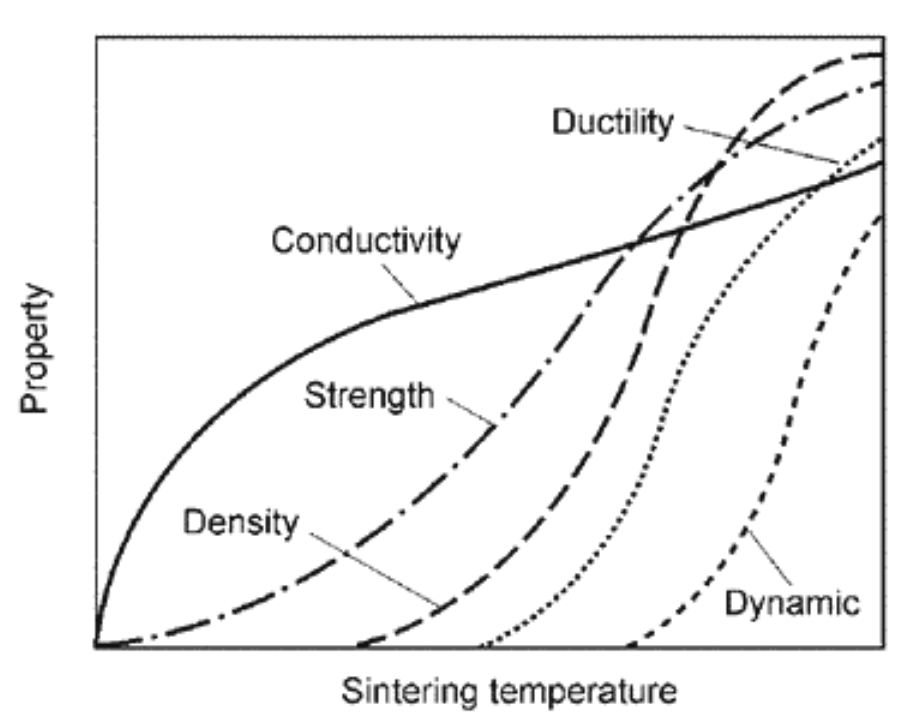 Variation in Compact Properties with Degree of Sintering
Reference: Samal, Prasan K. Newkirk, Joseph W.. (2015). ASM Handbook, Volume 07 - Powder Metallurgy (2015) - 34.2 Improved Mechanical Properties.(pp. 332). ASM International.
Sintering Mechanism in Metal Powders
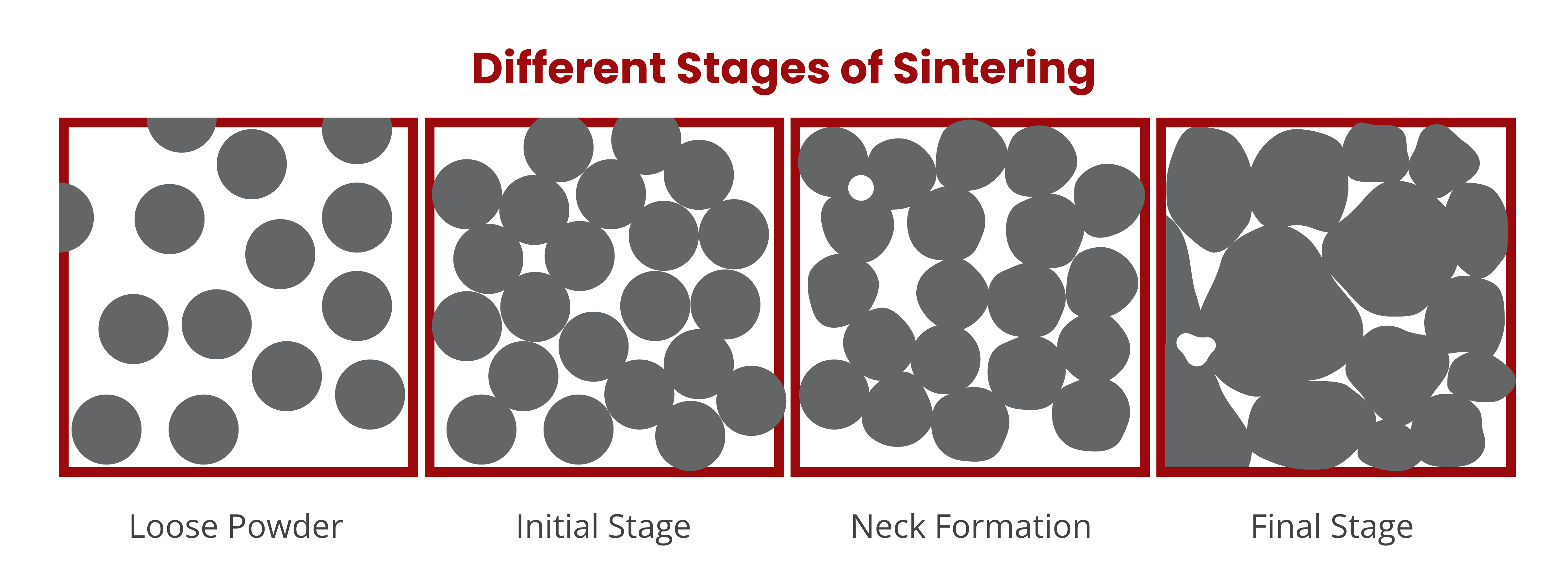
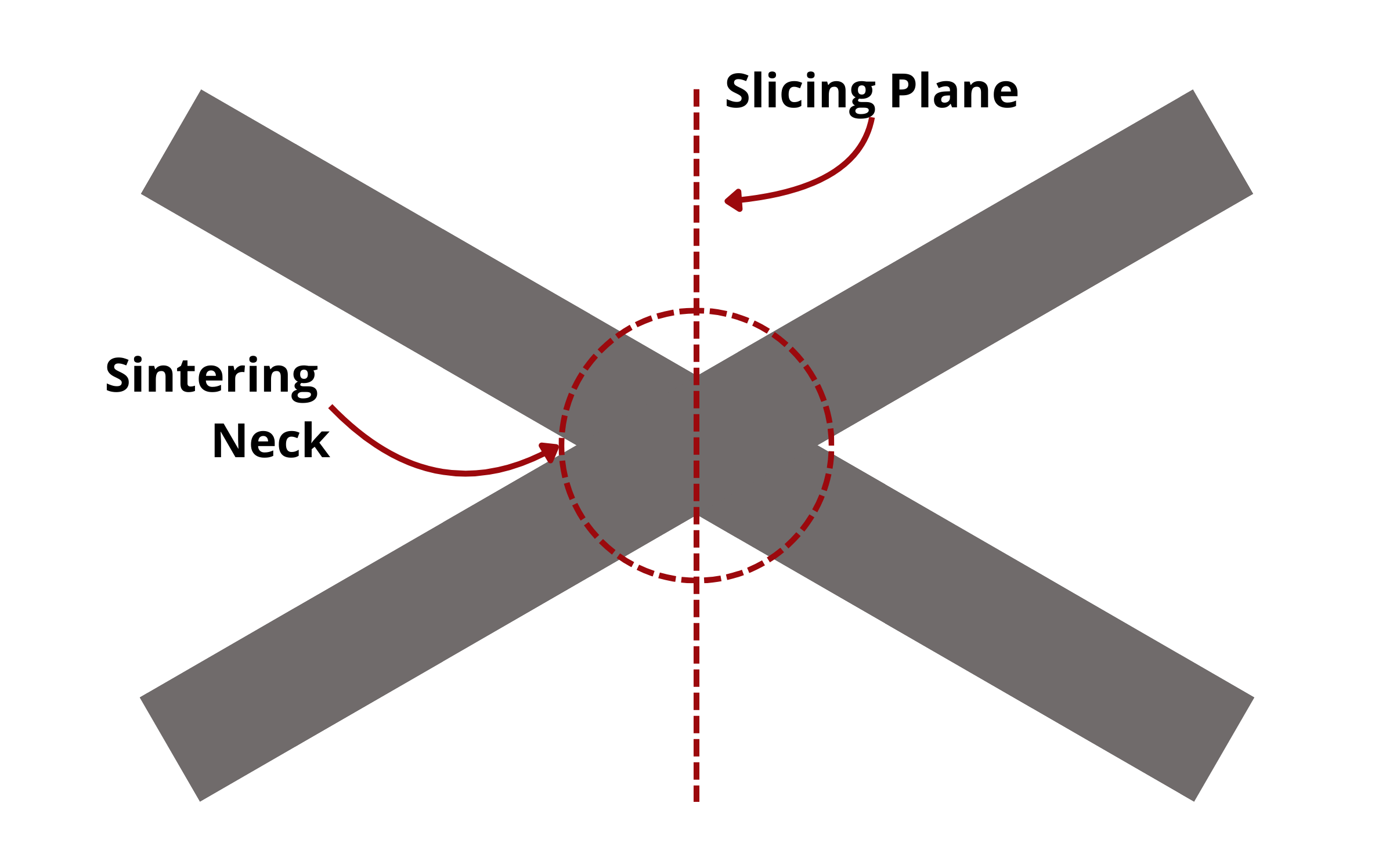
The different sintering stages show how loose metal powders transform into a solid object:
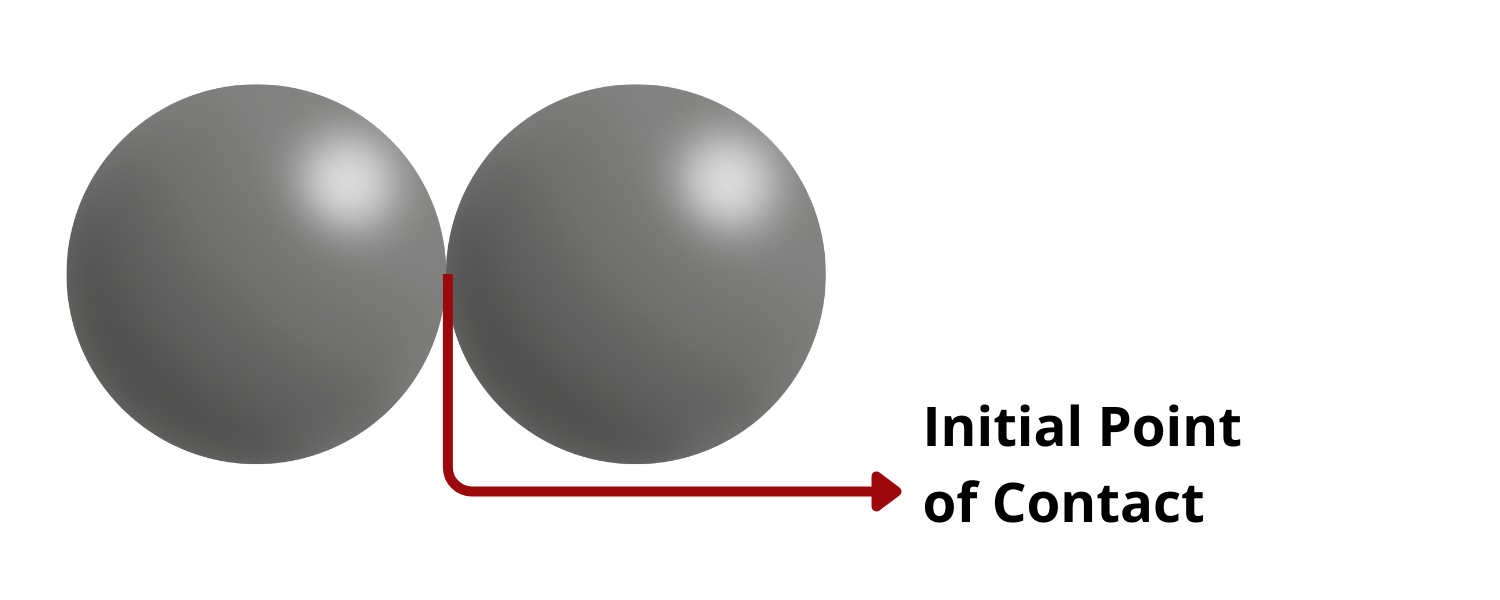
At the initial stage of sintering, particles start sticking together due to weak forces, like van der Waals' forces. At higher temperatures, they rearrange and pack together, sometimes rotating and twisting to achieve lower energy states in terms of their arrangement.
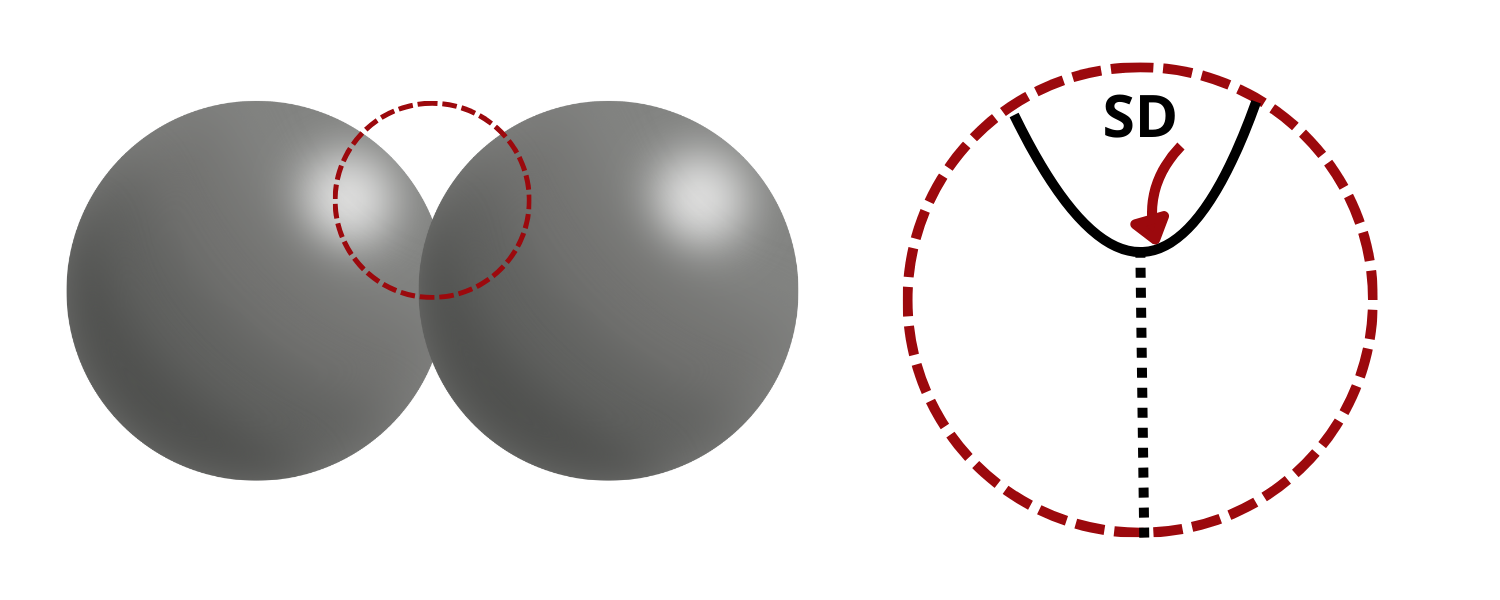
In the next stage, a sinter bond begins to form between the contact points established earlier, forming necks between particles. This occurs because atoms move from the surface of the particles to the contact points, reducing the surface area and forming interparticle bonds. This process, driven by surface transport mechanisms, strengthens the connections between particles but does not reduce the distance between them. Although this marks the start of sintering, there is little to no significant densification yet.
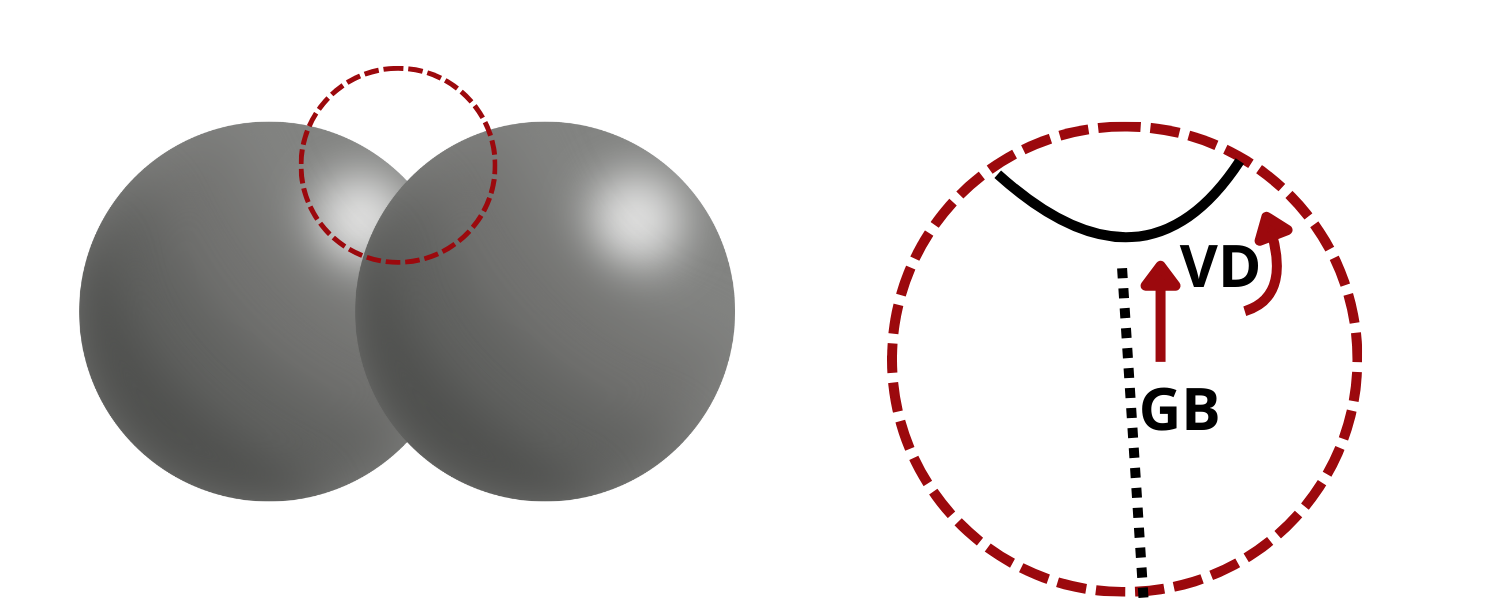
This stage is followed by the intermediate stage, where neck growth occurs, leading to densification. During this phase, the necks lose their distinct identities, and the pores become rounded but remain interconnected. At this point, the centers of the two spheres start to get closer, resulting in shrinkage. Bulk transport mechanisms predominate, facilitating neck growth and the elimination of pores.
In the final stage of sintering, interconnected open pores close and turn into isolated closed pores. As this happens, grain growth occurs, which slows down the surface and bulk diffusion processes. Consequently, this stage becomes the slowest, as densification increases from 95% to 99%.
(SD: Surface Diffusion, VD: Vacancy Diffusion, GB: Grain Boundary Diffusion)
Sintering Mechanism in Metal Fiber Felts
Throughout the sintering process of fiber felts, several transformations occur, such as the development of necks between fibers, the enlargement of grains within fibers, and changes in porosity. Similar to powder sintering, sintering of fiber metal felts involves six modes of material transport. Three of these modes lead to sintering without densification: vapor transport, surface diffusion, and lattice diffusion from the surface. Conversely, the other three modes lead to densification: boundary diffusion, lattice diffusion from the grain boundary, and lattice diffusion from dislocation.
To predict the sintering conditions necessary to achieve desired properties, sintering diagrams have been developed for different powders and wires. Originally, these diagrams were based on simple models, like the two-sphere model, which worked well for powders and wires. However, fiber felts, with their complex geometry, require a different approach.
Unlike in powders, where sintering occurs between particles bonded by van der Waals forces, sintering in fiber felts takes place in the joints between adjacent fibers at random angles. During the pressing or shaping of fibers, sintering joints primarily develop at points where fibers make contact. Under pressure, fibers interlock, forming many contact areas. These contact regions can be categorized as either fiber-to-fiber contact joints or fiber-to-fiber mechanical meshing.
During sintering, material migrates in fiber-to-fiber contact joints or mechanical meshing to reduce surface energy. Initially, sintering begins on microstructures' surfaces, forming contact points between fibers, which then strengthen. This process continues across the fiber network, forming a mesh-like structure. In comparison to sintering powders, sintering metal fiber felts undergo less densification. This is because surface processes, grain growth, and neck growth mechanisms dominate over densification processes like grain boundary diffusion.
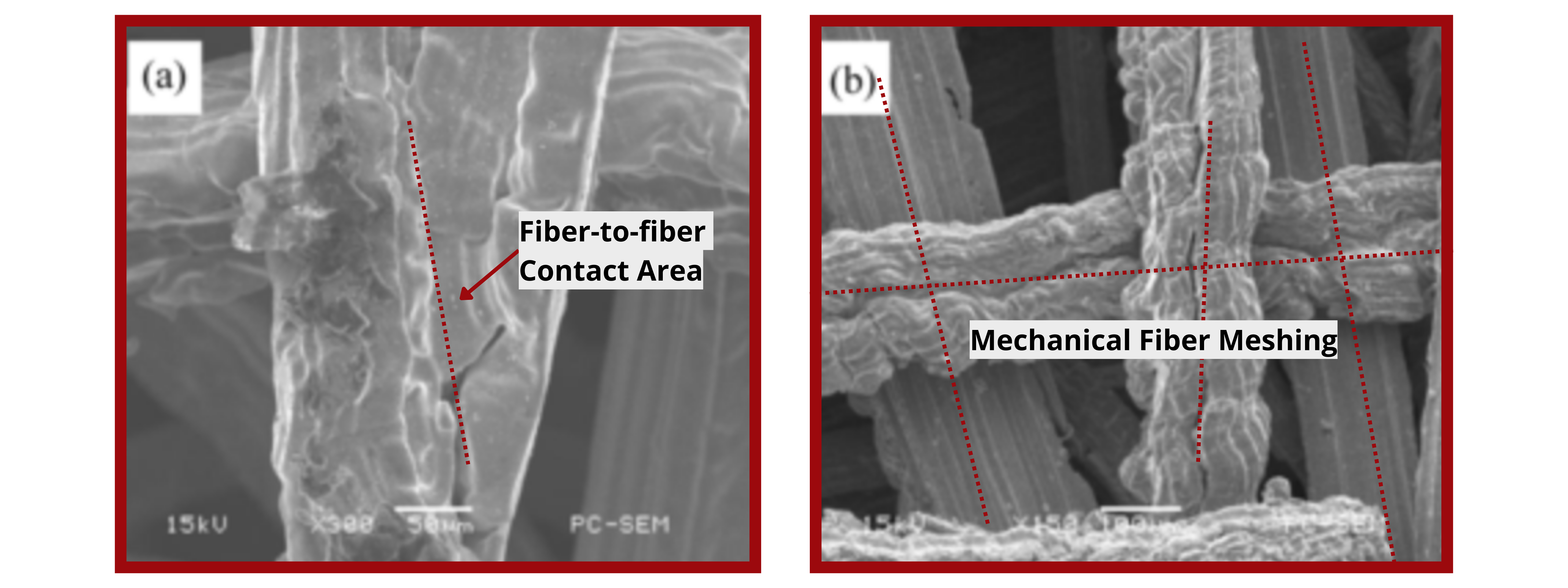
Contact Regions in Sintered Fiber Felts: Fiber-to-fiber (a) contact joints and (b) mechanical meshing
(Image Source: Tang, Y. et al. (2010) ‘An Innovative Fabrication Process of Porous Metal Fiber Sintered Felts with Three-Dimensional Reticulated Structure’, Materials and Manufacturing Processes, 25(7), pp. 565–571.)
Difference between Sintered Metal Powder and Sintered Metal Fiber Felt
Compared to sintered metal powder, sintered metal fiber felts are less dense, resulting in higher porosity and permeability. Sintered metal powders typically have porosities lower than 50%, whereas sintered metal fibers can achieve porosities higher than 50%. For instance, sintered titanium fiber felts can have porosities as high as 98%, with pore sizes smaller than 10 µm. Additionally, sintered metal fiber felts exhibit a three-dimensional reticulated structure. This structure not only provides well-defined conductive paths but also offers controlled electrical conductivity-temperature characteristics. The high porosity and decreased electrical resistivity due to the rupture of joint fiber contacts after sintering make sintered metal Fiber Felt an excellent material for applications such as water electrolyzers and fuel cells.
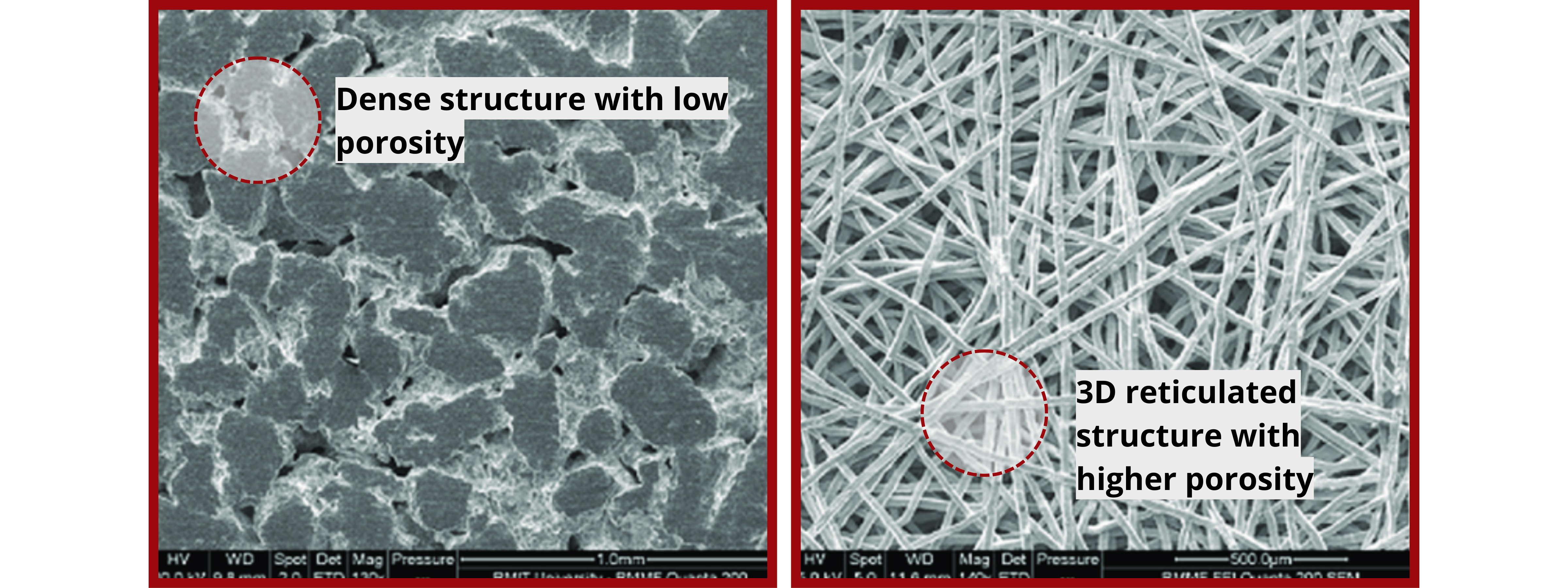
Scanning Electron Microscopy Images of Sintered Titanium (Left) Powder and (Right) Fiber Felt
(Image Source: Omrani, Reza & Shabani, Bahman. (2019). Gas Diffusion Layers in Fuel Cells and Electrolysers: A Novel Semi-Empirical Model to Predict Electrical Conductivity of Sintered Metal Fibres. Energies. 12. 855.)
Sintered Titanium Fiber Felts
Titanium fiber papers represent a specialized category of materials known for their unique properties and applications in various industries. These papers are composed of titanium fibers intricately woven together to form a porous and conductive structure. With their exceptional characteristics, titanium fiber papers find utility in diverse fields, ranging from electrochemical systems to filtration and aerospace applications.
Titanium fiber papers serve as versatile components in electrochemical systems, such as proton exchange membrane (PEM) electrolyzers and solid oxide electrolyzers. They function as critical elements in these devices, playing roles as gas diffusion layers, current collectors, and support structures. Their high electrical conductivity and corrosion resistance ensure efficient electron and ion transport, while the porous structure allows for effective gas diffusion, aiding in reactant distribution and facilitating electrolyte permeation.
Beyond electrochemical applications, titanium fiber papers find use in filtration processes, where their porous nature enables effective separation of particles and contaminants from fluids. They are often employed as filter media in industries such as pharmaceuticals, wastewater treatment, and air purification. Additionally, titanium fiber papers have gained traction in the aerospace sector for their lightweight yet strong characteristics, making them suitable for applications such as sound absorption, thermal management, and composite reinforcement.
Titanium fiber paper manufacturing process and properties
Titanium fiber paper is produced from titanium fibers through a laying process that involves lamination and lapping. The laminated titanium fibers are then sintered at high temperature, thereby creating a strong and porous three-dimensional fiber network. This three-dimensional structure endows titanium fiber papers with high surface area-to-volume ratio, high porosity, and high permeability. On top of these properties, titanium fiber papers are also known to be electrically conductive, workable (i.e., fiber papers can be rolled and processed), and highly resistant to corrosion and thermal stress.
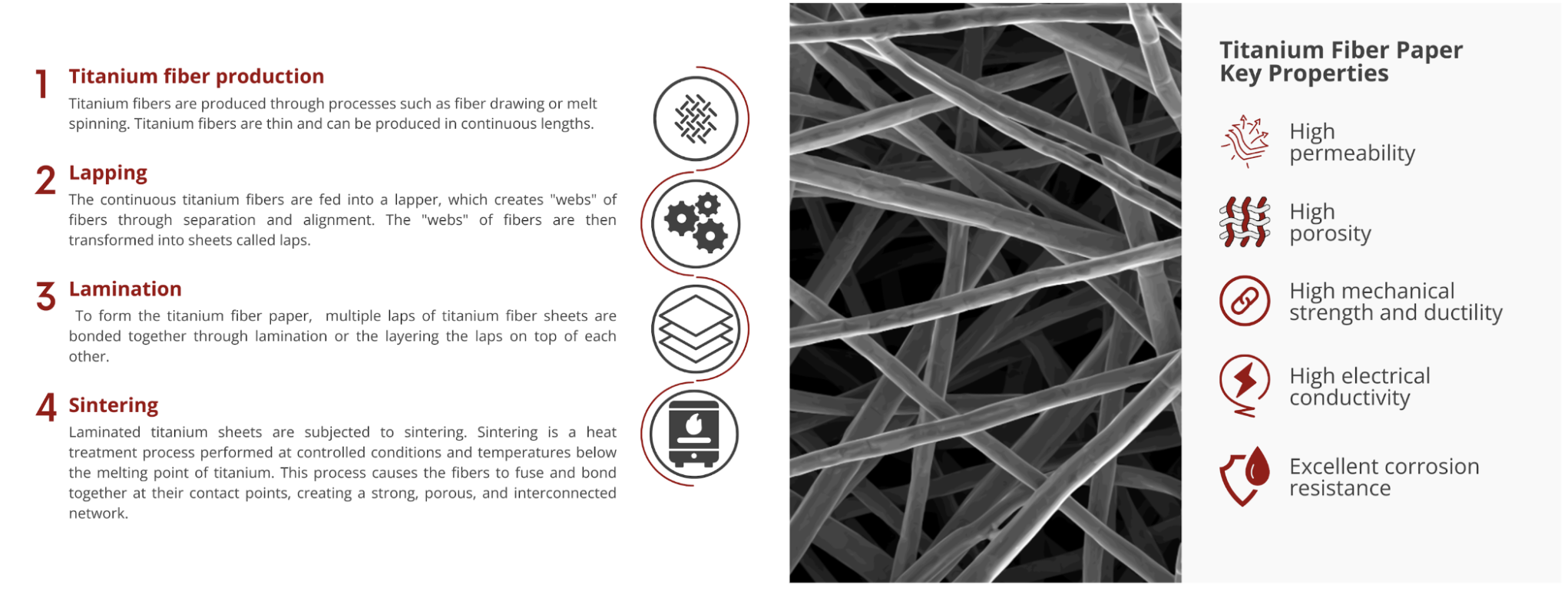
Titanium fiber felt applications
Titanium fiber papers are used in a wide array of applications including aerospace, medical, military, and filtration. Recently, they have been employed as flow field and anodic distributors in fuel cell and electrolysis stacks.
Titanium fiber paper vs. carbon fiber paper
At the cathode side, carbon paper is the predominantly used porous transport layer. On the other hand, at the oxygen (anode) side of fuel cells, the environment is much more corrosive because of usage of pure oxygen and application of potentials as high as 2 V. The highly oxidative environment at the anode corrodes the carbon-based LGDLs, thereby forming CO2 (Eqn. 1) and carbonate ions (Eqn. 2) in acidic and basic media, respectively. Carbon corrosion drastically reduces the the activity and stability of the anode during galvanic or electrolytic operations. For these reasons, metal-based PTLs, specifically titanium fiber papers, are used at the anode of fuel cells and water electrolyzers.

|
|
Carbon Fiber Paper
|
Titanium Fiber Paper
|
|
Application
|
Cathode PTL
|
Anode PTL
|
|
Advantages
|
High porosity and permeability
Cost-effectiveness
Good conductivity
Good compressibility
Low contact resistance
Tunable wettability
Efficient gas diffusion
|
High electrical conductivity
Excellent corrosion resistance
High mechanical strength
Good thermal resistance
High porosity and permeability
Efficient gas diffusion
Highly tunable surface properties
|
|
Disadvantages
|
Prone to corrosion at oxidative environments and high applied potentials
Brittle
Not suitable as anode PTL
|
Prone to hydrogen embrittlement
Not suitable as cathode PTL
|
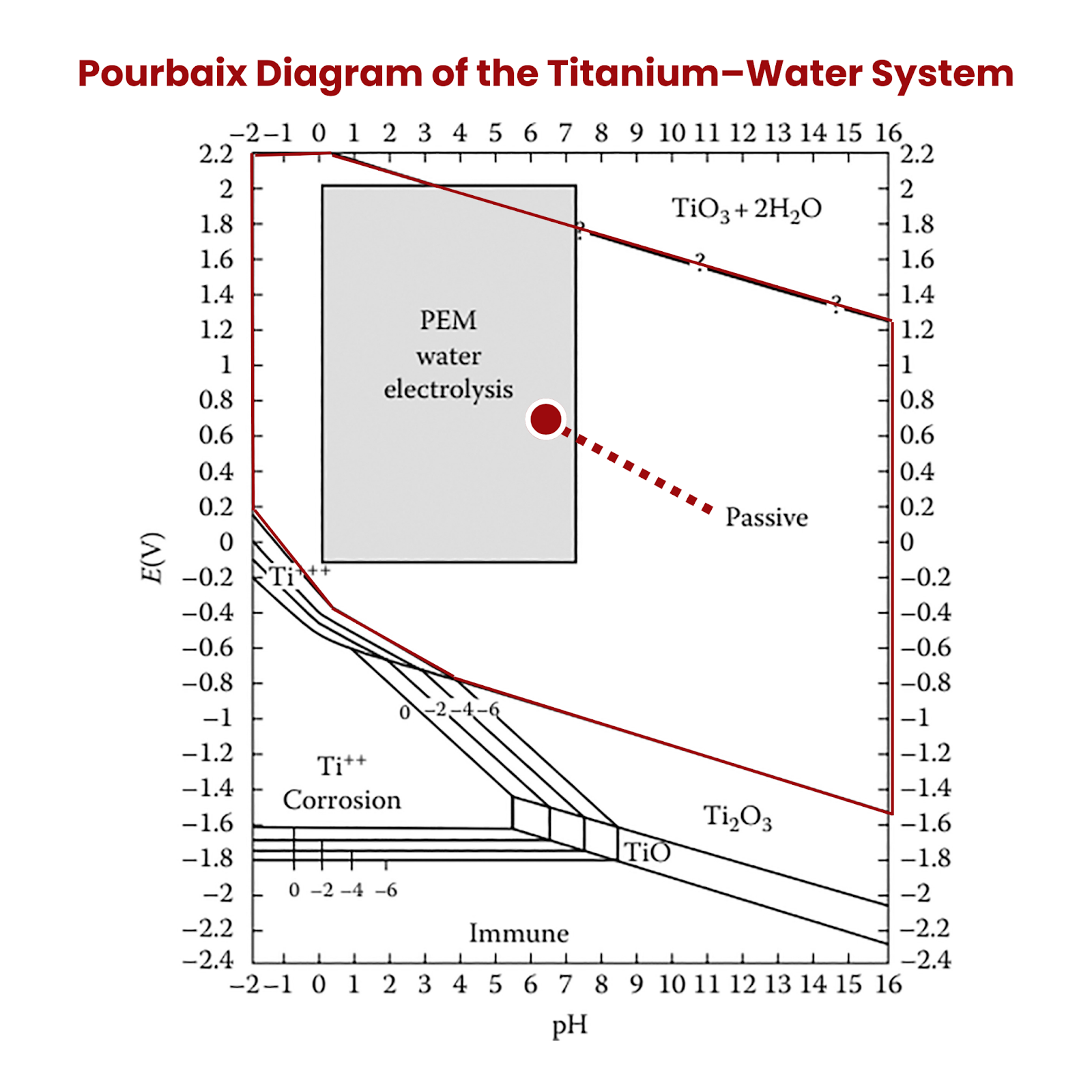
Titanium-based PTLs exhibit good corrosion resistance even when subjected to highly oxidative potentials. In the Pourbaix diagram of the titanium–water system, we can see that titanium forms a passivation layer under the operating conditions of PEM water electrolyzers. This layer prevents the direct contact between the titanium PTL and the corrosive electrolyte, thereby reducing the likelihood of corrosion. The passivation layer also stabilizes the titanium PTL surface and reduces the concentration of surface defects, which can serve as initiation sites for corrosive reactions. By minimizing the competing side reactions, the overall performance and durability of the electrochemical device improves substantially.
Titanium fiber paper as anode LGDLs in fuel cells and electrolyzers
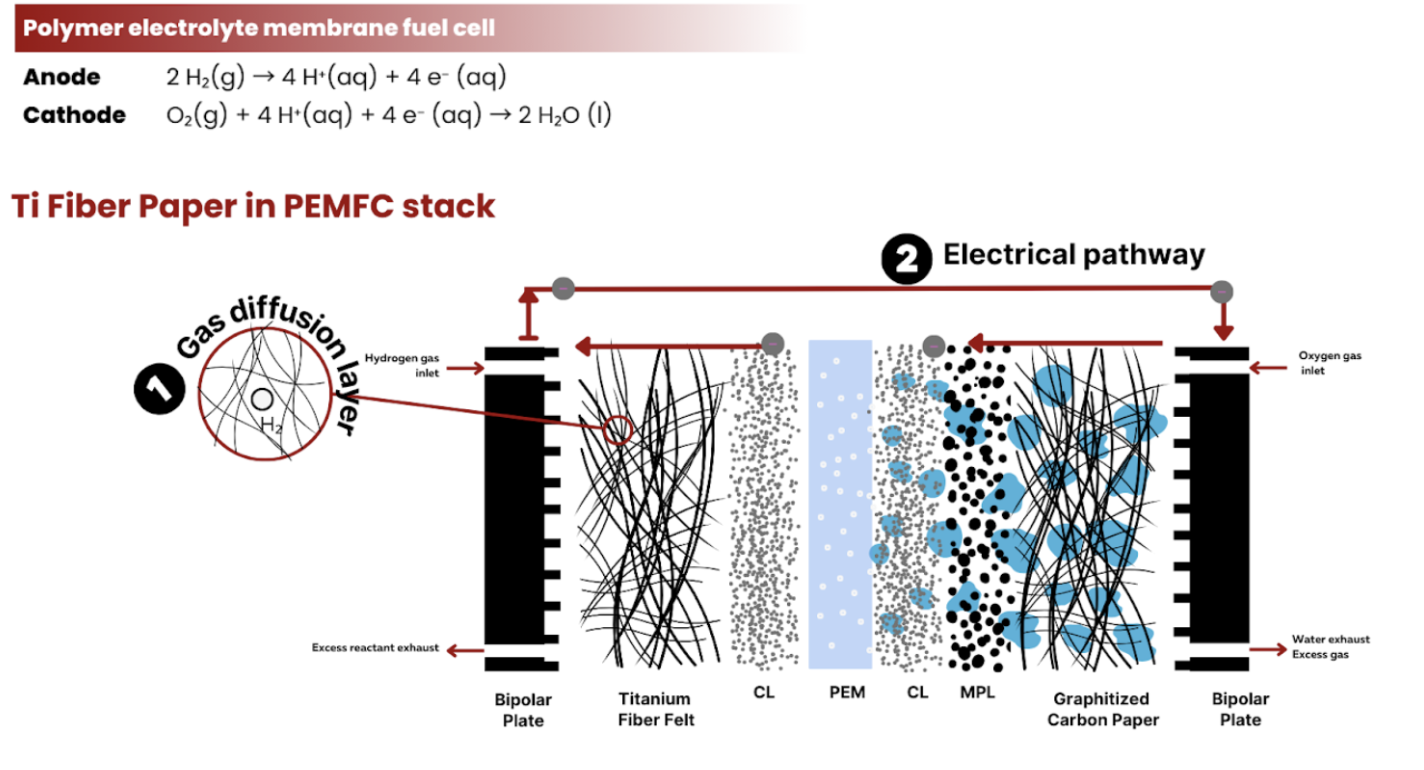
As the anode GDL in fuel cells, titanium fiber papers serve as a porous media for the efficient and uniform delivery of gaseous reactants to the catalyst layer (CL). They also provide pathways that facilitate electron transport from the anode to the cathode, in which electrons are being used up during the reduction reaction. In addition to these, titanium GDLs also serve as water diffusion layers to avoid flooding and manage water build up in the anode of alkaline fuel cell stacks.