What does ESD mean?
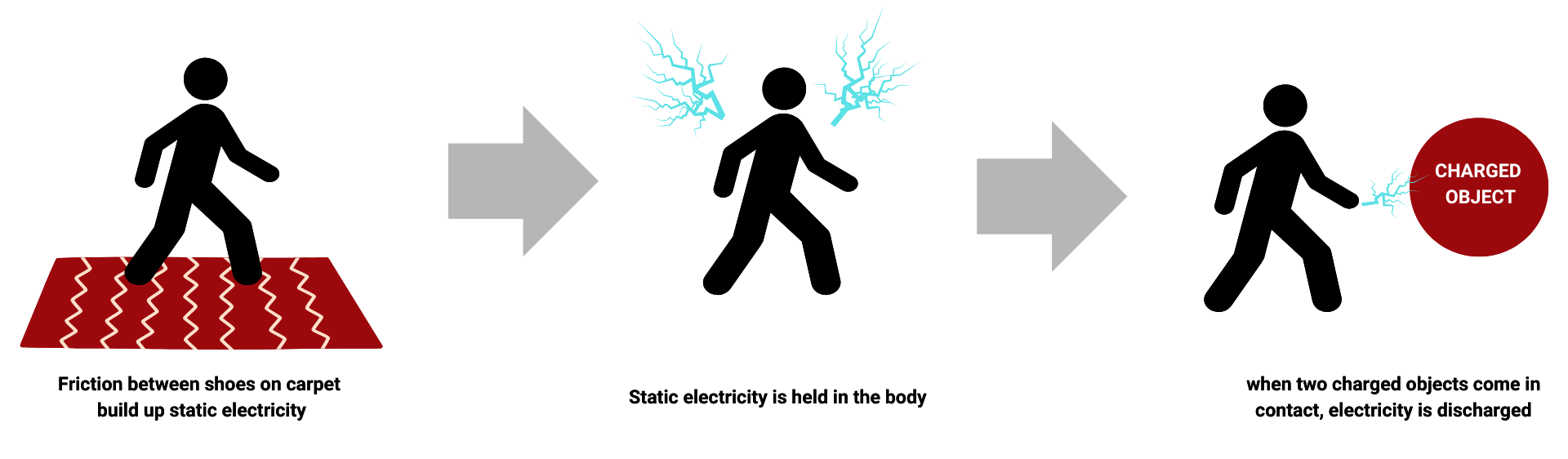
ESD stands for Electrostatic Discharge. Electrostatic discharge occurs when two charged parts come into contact with each other. It can also occur due to an electrical short or dielectric breakdown. ESD causes damage to electrical components that leads to malfunctioning or even permanent damage. The most common example is when one walks on a carpet, then a small shock occurs after touching another person or conductive object. This happens due to the friction between the shoes and the carpet, which generates static electricity. When the person comes in contact with the other "charged part", the energy is discharged.
Antistatic Tapes Applications
ESD is an issue for many industries and applications, especially those containing sensitive electronic components. Not taking the correct precautions for ESD is a safety, quality, and production concern. Some industries that benefit from the use of ESD tapes are:
- Electronics manufacturing (PCBs, used during assembly to protect sensitive components)
- Semiconductor industry (wafer handling, die attachment)
- Automotive industry (used during assembly to protect sensitive components)
- Medical industry (sensitive components)
- Consumer electronics (phones, tv's, tablets)
ESD Prevention with Antistatic Tapes
Antistatic tapes work by creating a pathway for electricity to be discharged. This prevents the buildup of electricity and gives it a conduit to pass through to dissipate. The tapes are made out of materials that dissipate or neutralize static electricity. Antistatic tapes are not only created to prevent ESD. They have multiple advantageous properties, including high and low temperature resistance, high puncture resistance, and high tear resistance.
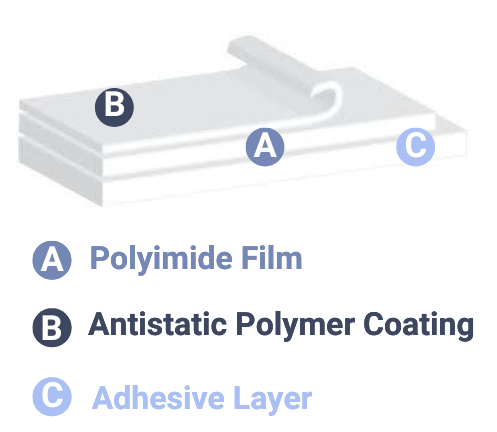
Product Cross Section
Antistatic tapes are made up of 3 components. First, you have the polyimide film, second, you have the antistatic polymer, and lastly you have the adhesive layer. The adhesive layer can be composed of acrylic or silicone. In some cases, a release liner is also required. This doesn't affect the chemistry or final thickness of the tape.