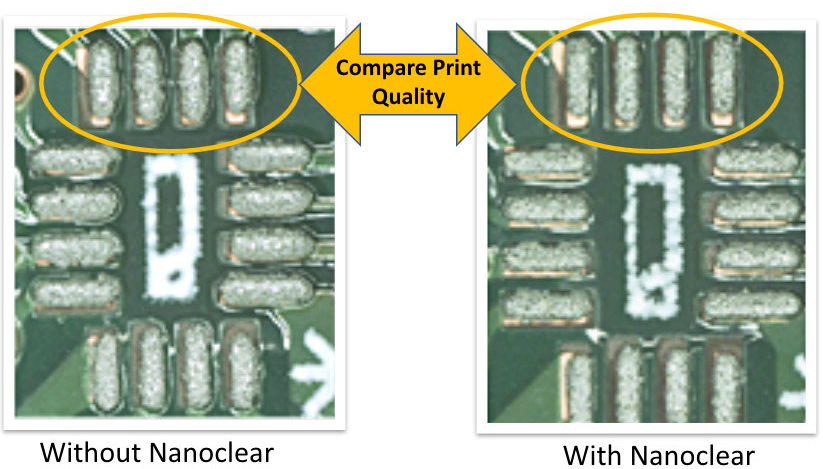
Fluxophobic stencil treatments are special coatings applied to stencils used in the printing process of surface-mount technology (SMT) printed circuit boards (PCBs). The goal of these coatings is to prevent the adhesion of flux residue, a byproduct of the soldering process, to the stencil, thus increasing the yield of good PCBs, reducing cleaning time and costs. These coatings are typically applied to the surface of the stencil using a spray, brush or roller and are often used in conjunction with other stencil treatments, such as anti-tarnish and anti-stick coatings, to improve the performance of the stencil and the overall SMT process.
The benefits of using fluxophobic stencil treatments include reducing cleaning time and costs, increased accuracy of the printing process, improved yields of good PCBs, and long-lasting protection of the stencil. The choice of fluxophobic stencil treatment will depend on the specific requirements of the application, such as the type of flux being used and the environment in which the stencil will be used.
Aculon NanoClear stencil wipes deliver increased output and yield in assembly lines. They reduce the number of under-stencil wipes. Faster release and improved print resolution is achieved. NanoClear stencil technology has been proven on the market and now with a new and improved formula outperforms the competition in terms of performance and ease of use.