What's the difference between fusion bonded epoxy powder and epoxy coating powder?
In a word: Nothing. The term fusion bonded epoxy coating powder or fusion-bond epoxy coating powder, abbreviated as FBE is often reserved for applications such as concrete reinforcement bars (rebars), pipe-coating or valve coating.
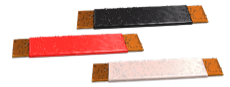
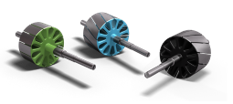
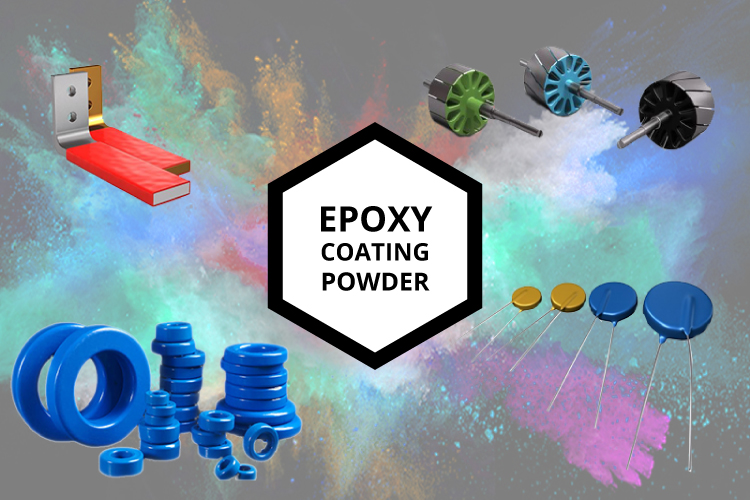
The name epoxy coating powders, on the other hand, are more common in the electronics, automotive and power distribution industries for passive component coating, motor iron armature insulation, and busbar coating. Both are thermoset plastic epoxy coatings.
How much insulation can be achieved using epoxy coating powder?
Epoxy coating powder can insulate parts as low as 1.5 volts and as high as 50,000 volts. Low voltages (traditionally defined as less than 600V) can be coated with very thin layers of epoxy. Medium voltages (defined as up to 38,000 volts) require high dielectric strength epoxy and thicker coating layers.
What is the difference between the various formulations of epoxy molding compounds?
Epoxy coating powders' basic function is to provide electrical insulation and mechanical protection. The difference between the formulations has mostly to do with the applications for with they are designed and their application methods.
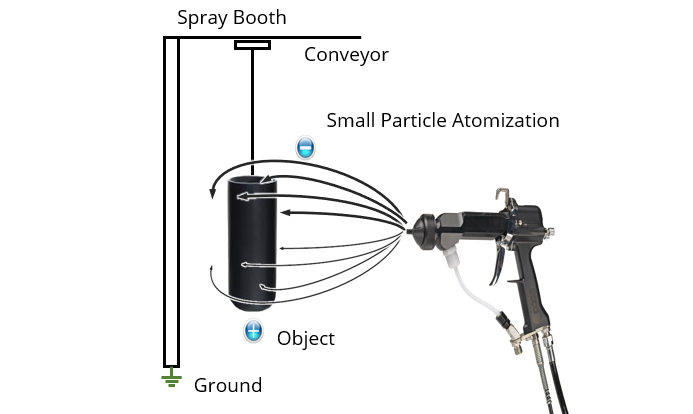
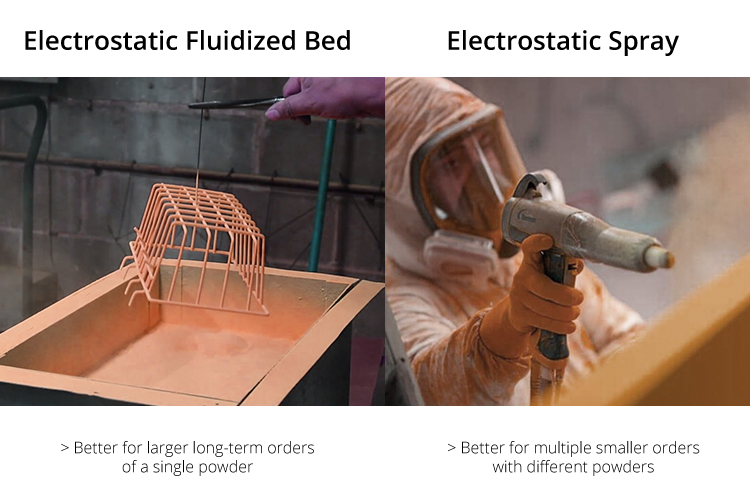
Application types require more or less of each electrical insulation and mechanical properties and the rest of the properties are designed to be optimized for electrostatic spray, fluidized bed or electrostatic fluidized bed applications methods.
Are there known brand names that use epoxy coating powder?
We have a relationship with Nordson, who make a range of electrostatic powder coating equipment. We have been successful implementing solutions with Nordson and are proud to recommend their equipment.
We also have experience with GAT finishing systems who make very complete epoxy powder coating rooms.
How thick can we coat using epoxy coating powder?
Coating thickness depends on the application method used. Using electrostatic coat only, the maximum thickness you could spray is approximately 250 microns. Depending on the epoxy type, this could insulate up to approximately 1000 volts. If the parts are preheated before electrostatically spraying, you could achieve up to 1200 micron thickness which could insulate up to approximately 12,000 volts.
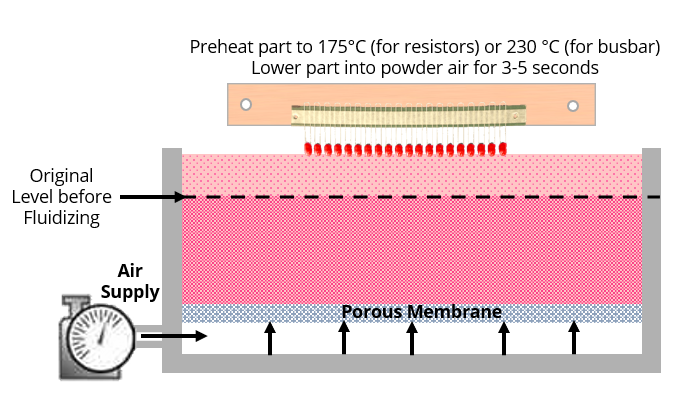
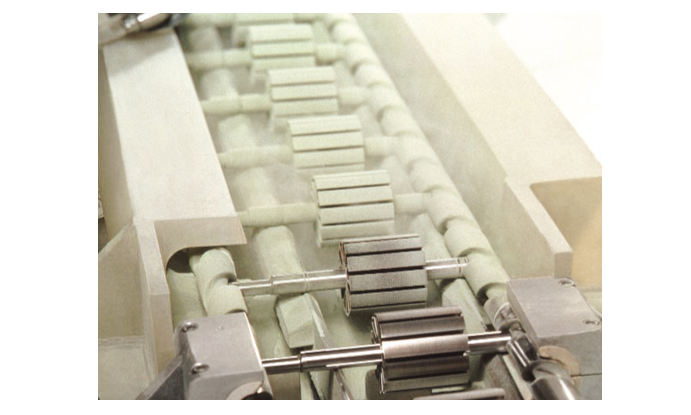
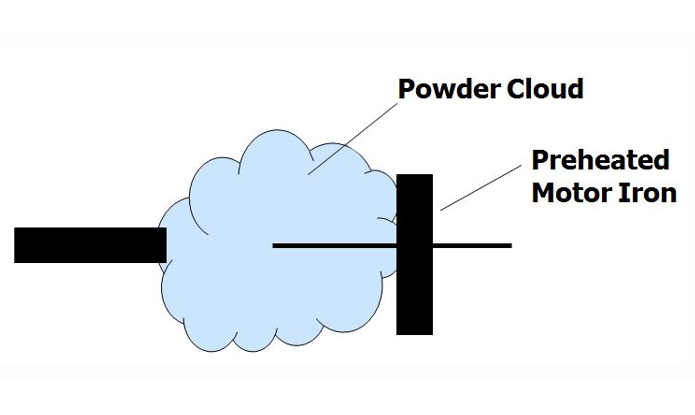
Using a fluidized bed and preheated parts with multiple dips, you can easily coat to 4mm (4000 microns) and could insulate medium voltage busbars up to 40,000 volts. With special epoxy coating powders, it is possible to build as thick as 5mm and achieve insulation up to 50,000 volts.
How are epoxy coating powders cured?
Epoxy coating powders are cured at two different temperatures using a process known as a 'step cure.' This step involves initial curing at a lower temperature followed by second curing at a higher temperature.
Starting with a lower temperature in the first step minimizes stress buildup, as epoxy tends to shrink during the evaporation of volatile materials. During this first step, moisture and volatile materials that could evaporate at this temperature are removed at a slow rate. This controlled evaporation rate prevents the formation of porosities within the epoxy caused by the vapor as it exits the resin.
The second step, conducted at a higher temperature, enhances epoxy crosslinking, optimizing the cured material properties, including CTE (Coefficient of Thermal Expansion), Tg (Glass Transition Temperature), and modulus.
How do I prevent bubbles from forming after coating?
Parts must be very clean beforehand (no oil, fingerprints, etc.) and the powder should be sprayed at room temperature. Running a Design of Experiment to find the the best temperature and time to preheat and post cure materials is always recommended.
Can I make my own fluidized-bed for epoxy coating powder?
Yes you can, it is not very complicated at all. You simply need a design that allows you to pass clean compressed air through a porous membrane or fluidizing sheets. Two references are Genpore Fluidizing Sheets and Porex's porous membranes. We have designs that we can offer you.