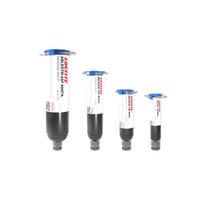
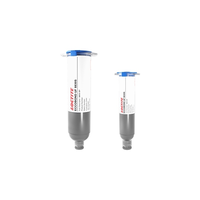
Threadlockers

Low, Medium, and High Strength

Threadlockers

Threadlockers are anaerobic adhesives engineered to prevent nuts, bolts, and other threaded fasteners from loosening under vibration, shock, or thermal cycling. Unlike conformal coatings or structural adhesives, they cure only in the absence of oxygen and in the presence of metal ions, meaning the liquid resin remains stable and workable while exposed to air, then polymerizes into a hard, thermoset plastic once confined between the mating threads of a fastener.

Threadlockers are graded by their locking strength: low-strength grades allow the fastener to be removed with standard hand tools for parts requiring periodic adjustment or maintenance, medium-strength grades balance secure retention with serviceability for general assembly, and high-strength grades create a permanent bond intended for fasteners that should never be removed. Selection depends on the required breakaway torque, the fastener size and metal type, and whether future disassembly is expected.

Frequently asked questions

Frequently Asked Questions about Threadlockers

How do threadlockers cure without mixing or exposure to air?

Threadlockers use anaerobic cure chemistry, meaning they remain liquid as long as they are exposed to atmospheric oxygen. Once the adhesive is confined between the mating metal surfaces of a threaded fastener, oxygen is excluded and trace metal ions on the substrate surface trigger free-radical polymerization, causing the resin to harden into a rigid thermoset within the thread gap.

What is the difference between low, medium, and high-strength threadlockers?

Low-strength threadlockers form a light bond that can be removed with standard hand tools, suited to fasteners requiring frequent adjustment. Medium-strength grades offer secure vibration resistance while still allowing removal with hand tools when needed, making them the general-purpose standard for most assemblies. High-strength grades form a bond strong enough to require heat or specialized tools for removal and are intended for fasteners that are not meant to be disassembled during the life of the equipment.

Why do threadlockers cure slowly on stainless steel or plated fasteners?

Anaerobic cure depends on trace metal ions at the substrate surface to initiate the reaction. Active metals, such as bare steel, brass, and copper, provide enough surface reactivity for a fast, reliable cure. Passive metals, including stainless steel, zinc-plated, or anodized fasteners, have surface oxide layers that slow or inhibit the reaction, which can significantly extend cure time or leave the threadlocker incompletely cured. A compatible primer or activator is often used on passive substrates to restore normal cure speed.

Does thread gap size affect threadlocker performance?

Yes. Threadlockers are formulated for specific gap ranges based on their viscosity, and most standard grades are designed for typical machine-thread clearances. Excessively loose or worn threads exceed the product's rated gap-fill capability, which can result in reduced locking strength or incomplete cure. Thread size and expected clearance should be checked against the product's rated gap range before selection.

What is the difference between a threadlocker and a thread sealant?

Both products may share similar anaerobic chemistry, but their primary function differs. Threadlockers are formulated to prevent fastener loosening under vibration and to secure mechanical retention. Thread sealants are formulated to fill the void between mating pipe or fitting threads to prevent fluid or gas leakage. A product intended as a thread sealant should not be assumed to provide the same locking torque performance as a dedicated threadlocker, and vice versa.

How is a cured threadlocker removed for disassembly?

Removal depends on the locking strength grade used. Low and medium-strength threadlockers typically release with standard hand tools once sufficient breakaway torque is applied. High-strength threadlockers generally require localized heat, often in the range that softens the cured thermoset polymer, applied directly to the fastener before attempting removal, since forcing a high-strength joint without heat risks damaging the fastener or surrounding components.


Learn more

Threadlockers: Anaerobic Fastener Retention

Threadlockers are anaerobic adhesives that remain liquid while exposed to air but cure into a rigid thermoset once confined between the mating threads of a fastener, where the absence of oxygen and the presence of metal ions trigger polymerization. The cured resin fills the microscopic gaps between thread flanks, preventing the fastener from backing out under vibration, shock, or thermal cycling.

Selection comes down to locking strength: low-strength grades allow removal with hand tools for fasteners requiring periodic adjustment, medium-strength grades balance secure retention with serviceability, and high-strength grades form a permanent bond intended for fasteners that should never be disassembled.

Threadlocker Strength Selector Guide

Locking strength determines whether a fastener can be removed with hand tools, or is intended to stay locked permanently

Low-Strength
Locking Torque
★★☆☆☆
Removability
★★★★★
Vibration Resistance
★★★☆☆
Removal Method
Hand tools
Best for small fasteners, frequent adjustment, delicate assemblies
Medium-Strength
Locking Torque
★★★★☆
Removability
★★★☆☆
Vibration Resistance
★★★★☆
Removal Method
Hand tools
Best for general-purpose assembly, most machinery and equipment fasteners
High-Strength
Locking Torque
★★★★★
Removability
★☆☆☆☆
Vibration Resistance
★★★★★
Removal Method
Heat required
Best for permanent fasteners not intended for disassembly

Key Performance Considerations

Anaerobic Cure Trigger

Stays liquid in the bottle indefinitely when exposed to air, but cures once confined between metal threads, excluding oxygen and reacting with surface metal ions.

Active vs Passive Metals

Cures readily on active metals like steel, brass, and copper. Passive metals such as stainless steel or plated fasteners slow the cure and may need a primer or activator.

Gap Fill Range

Formulated for specific thread clearances based on viscosity. Excessively loose or worn threads can exceed the rated gap-fill capability and reduce locking strength.

Threadlocker vs Thread Sealant

Threadlockers secure mechanical retention against loosening. Thread sealants fill void space to prevent fluid or gas leakage. The two functions should not be assumed interchangeable.

Core Applications

Machinery & Equipment

Securing bolted fasteners on rotating or vibrating equipment where loosening could cause failure or safety risk.

Automotive Assembly

Locking fasteners on components subject to constant vibration and thermal cycling under the hood and chassis.

Electronics & Instrumentation

Low-strength grades secure small fasteners in devices and enclosures that may require future service access.

MRO & Field Maintenance

Reworking or preventatively locking fasteners on equipment already in service to prevent loosening in the field.

Need Help Selecting the Right Threadlocker?

Threadlocker selection depends on required locking torque, fastener size, metal type, and whether future disassembly is expected. Our technical team provides product selection support, trial quantity sourcing, and application guidance across low, medium, and high-strength threadlocking systems.

Threadlocker – Quick Reference

Low-StrengthRemovable, small fasteners, frequent adjustment
Medium-StrengthGeneral purpose, hand-tool removable
High-StrengthPermanent, heat required for removal

Recently viewed products

Leading Brands Trust in Our Products and Services

Products that Perform | Knowledge that Serves | Service that Delivers