PTFE Tapes
When talking about polytetrafluoroethylene (PTFE) or more commonly known as Teflon tapes, there are two general types of tape that are associated with the name: regular Teflon tapes and skived PTFE tapes.
The former is produced through extrusion and is commonly used for home improvements. On the other hand, skived PTFE tapes are produced by thinly and uniformly slicing layers of Teflon from a larger, bulkier block of the material.
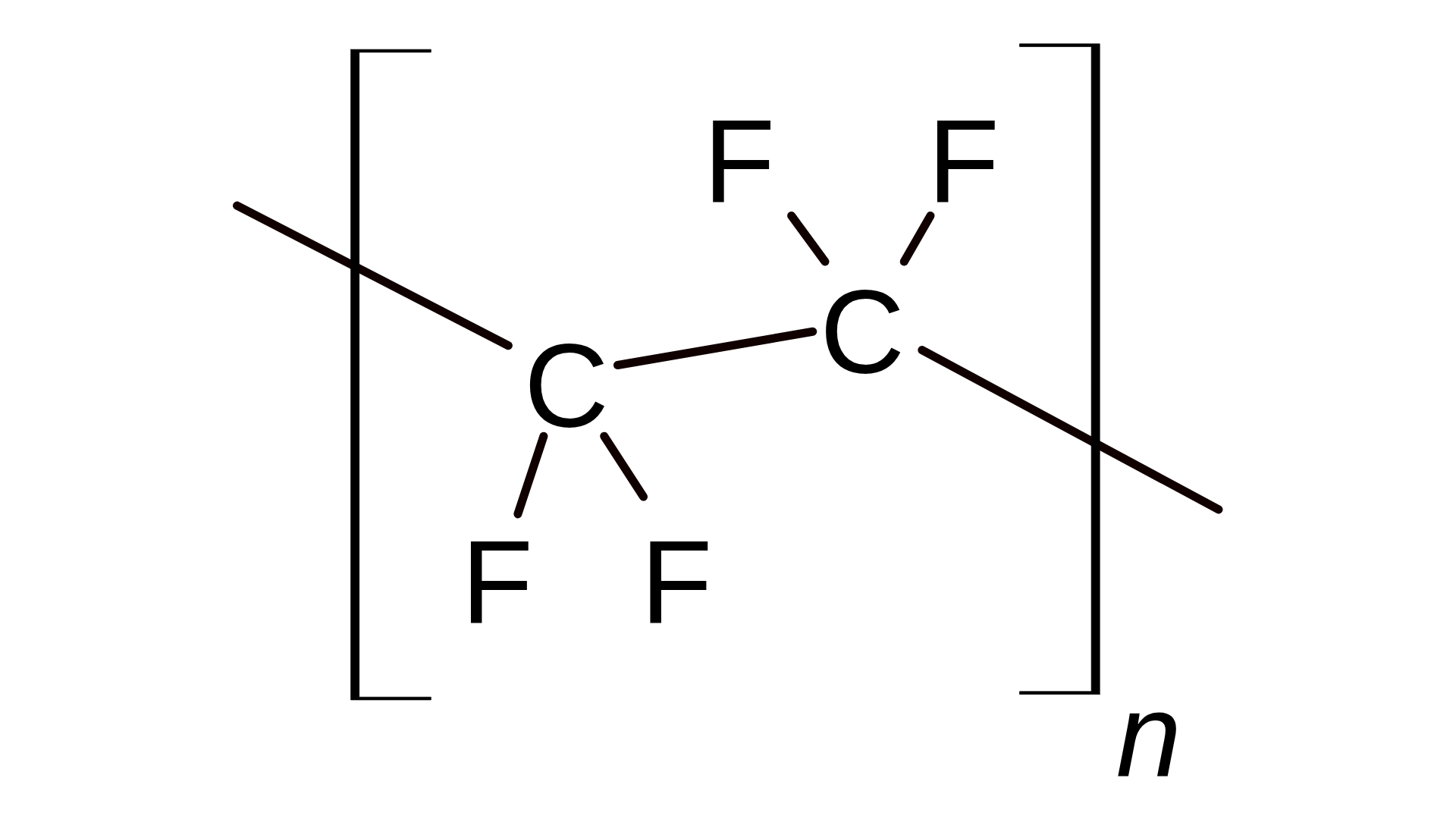
From its name alone, skived PTFE tape is made up of two elements: carbon and fluorine. It is a polymer consisting of long chains of repeating units (also called monomers) of carbon and fluorine, which have a strong polar covalent bond (i.e., they “share” electrons). The bond between carbon and fluorine is so strong that they refuse to bond with other elements.
Additionally, there are two types of forces present in bulk materials, especially in the context of polymers: adhesive and cohesive forces.
Cohesive Forces
Collectively refer to intermolecular forces between the molecules that resist separation. If a stronger cohesive force is present between polymer chains, they are more likely to resist separation and remain bundled up together.
Adhesive Forces
Refer to the attractive forces between unlike substances, which then disrupt the cohesion between “like” polymer chains.
Long chains of PTFE, when bundled up together, have strong cohesive forces. The strong bonding between carbon and fluorine also makes the material have significantly low surface energy and adhesion forces with, virtually, anything that comes into contact with it. In simpler terms, the bond between carbon and fluorine are so strong that they don't want to bond with anybody else. This makes PTFE the ideal polymer for applications requiring materials that are chemically inert, low friction, and non-stick.
Listed below are the desired properties of skived PTFE tapes that make them suitable for several applications:
- High heat and chemical resistance
- Excellent electrical insulator (high dielectric strength, high surface resistivity, and resistance to electrical breakdown)
- Significantly low coefficient of friction
- Non-stick surface
When selecting the right skived PTFE tape, the following properties should be considered in relation to the intended application:
- Thickness - affects other properties such as strength and flexibility
- Width
- Adhesive type & thickness
- Peel strength
- Breakdown voltage
Skived PTFE tapes are typically used for the following applications:
- Creating a non-stick surface on rollers and belts of industrial machines that usually handle tacky and sticky materials such as adhesives.
- Protection for wires against the elements, especially those exposed to extreme heat.
- It can also be used as mold release for composite molding.
- PTFE tapes can also protect surfaces against corrosive chemicals since the material is considered as chemically inert.
Presentations
Specialty Tapes and Films Product Catalog
This presentation showcases a comprehensive portfolio of specialty tapes and films for electronics, industrial, automotive, aerospace, and advanced manufacturing applications. It highlights product technologies, key performance characteristics, and recommended applications, helping engineers and manufacturers identify the right bonding, insulating, masking, shielding, and protective materials for their assembly processes.
Specialty Tapes Fundamental Principles
This presentation introduces the fundamental principles behind specialty tape technologies, including adhesive systems, backing materials, bonding mechanisms, and performance characteristics. It explains key selection criteria, application methods, and environmental considerations to help users choose the most suitable tape solutions for demanding industrial and electronic assembly applications.