
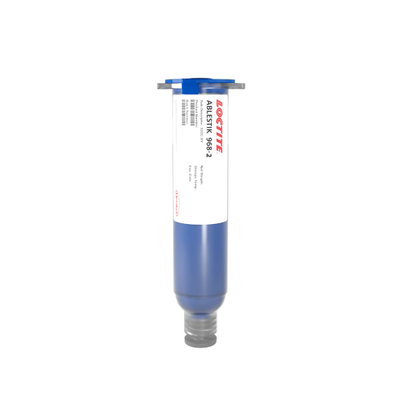
LOCTITE ABLESTIK 968-2
Harmonization Code : 3506.10.00.00 | Prepared glues and other prepared adhesives, not elsewhere specified or included; products suitable for use as glues or adhesives, put up for retail sale as glues or adhesives, not exceeding a net weight of 1 kg
Main features
- Electrically insulating
- Hybrid chemistry
- Dispense and Stencil print
Product Description
LOCTITE ABLESTIK 968-2 die attach adhesive is designed for microelectronic chip bonding applications. This adhesive is ideal for application by syringe dispensing or screen printing. It has been used for large die sensor die attach.
LOCTITE ABLESTIK 968-2 is an electrically insulating epoxy with a proprietary hybrid chemistry. It is successfully used in aerospace and defense applications, meets the requirements of MIL-STD-883, Method 5011 and can pass the NASA outgassing standard if properly cured.
Cure Schedule
- 2 hours @ 150°C
968-2
Unlike other products we offer, the products listed on this page cannot currently be ordered directly from the website.
 Shipping in 12 weeks
 Shipping in 12 weeks
 Shipping in 20 days
Packaging
TDS, SDS & Technical Documents
- LOCTITE ABLESTIK 968-2
- LOCTITE ABLESTIK 968-2 known as Ablebond 968-2 (5.4g), NL-MSDS_UT_NL
- LOCTITE ABLESTIK 968-2 known as Ablebond 968-2 (5.4g), NL-MSDS_UT_EN
Technical Specifications
General Properties
Thermal Properties
Physical Properties
Additional Information
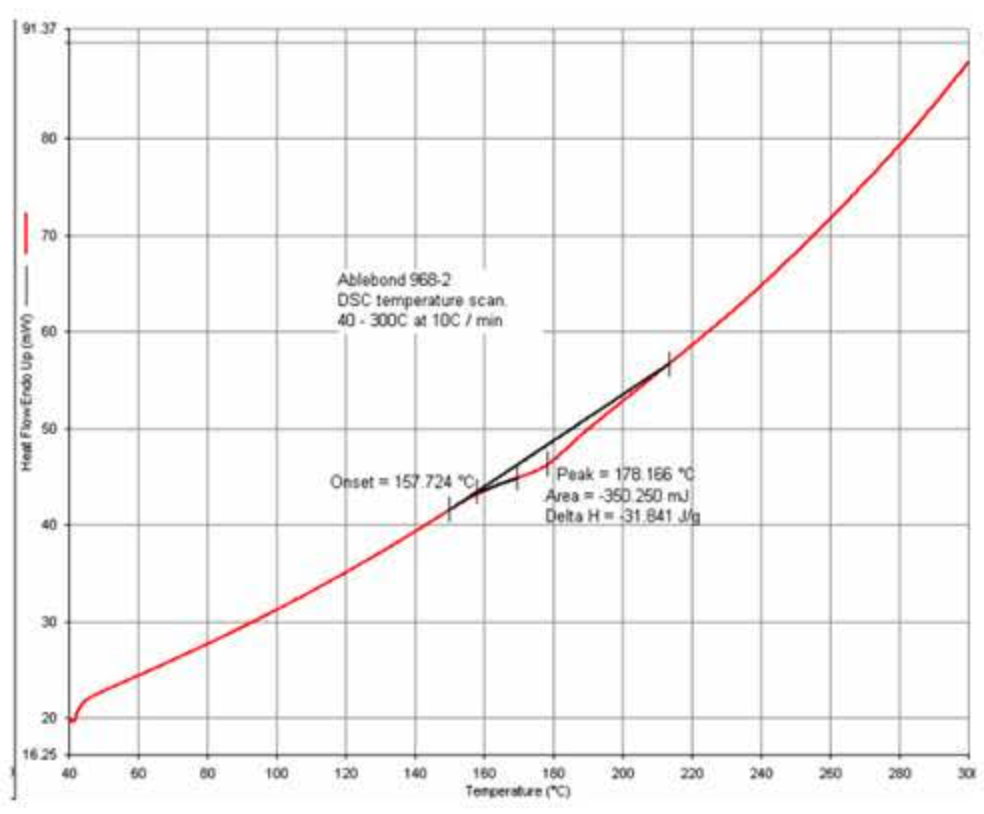
The trace below indicates a calculated “onset” of cure at about 158°C. But the cure starts below that – typically 30°C for this type of chemistry – and we know from long experience with 968-2 that the cure starts happily at 125°C.
968-2 Temperature Scan
Are you having issues with leakage?
Even this is not to be expected, air pressure within the package could lead to some leakage in certain configurations. In this case there are some solutions that you can consider.
- Vent hole: The “optimum” solution is to introduce a vent-hole. Either a small hole in the package, or an incomplete dispensed ring of 968-2. Then “plug” the hole after the 968-2 is cured. This can be done with a small amount of low temperature cure epoxy, or a UV/thermal dual-cure adhesive (eg NCA2280). Yes – the “plug” represents a potential weak point in the structure. However, it is a very small volume of material. If a filled adhesive is used, the CTE could be similar to the 968-2 and the very small volume will give low outgassing. Products like Eccobond 45 & Eccobond 104 & Stycast 2850FT might be worth a try.
- Optimize curing: It might be possible to optimise the 968-2 sealing with a slower of faster temperature ramp during cure. This would need to be determined experimentally. A very slow ramp rate from 25°C to the cure temperature might allow the air to diffuse through the glue, without moving the glue.
- Higher viscosity pastes: Products such as 968-4 with higher viscosity can help withstand the air pressure better and prevent any leakage.


