
A6280 | Anti bleed Additive
Harmonization Code : 3910.00.00.90 | Silicones in Primary Forms; Others

Main features
- Use in Non-metal-filled systems
- Excellent bleed control on Gold surfaces
- Non halogenated
Product Description
A-6280 is a proprietary non-halogenated additive designed to reduce resin bleed out on a variety of surfaces (especially difficult to control gold surfaces) with minimal or no affect on the adhesion properties of the formulation. It shows excellent results when used in non-metal filled systems. It is co-curable in free-radical polymerization. It can also enhance the rheological properties of various filled adhesives.
A-6280 anti bleed additive is co-curable in free radical polymerization and is recommended for use as an additive to reduce resin bleed out specifically on metal surfaces. The recommended addition of the A-6280 to a formulation is between 0.5% - 1% weight percent of resin. It shows superior bleed control in formulations that contain non-metal fillers such as silica.
A6280
Unlike other products we offer, the products listed on this page cannot currently be ordered directly from the website.
 No longer available
 No longer available
 Shipping in 2 weeks
Packaging
TDS, SDS & Technical Documents
- DMI - A6280
- A6280 GHS SDS
Technical Specifications
General Properties
Thermal Properties
Physical Properties
Additional Information
Flash point considerations
We've used anti-bleeds in die attach pastes for years. We did not see nor did we get reports of the die attach pastes (or the components thereof) causing voids during curing. Additionally, the fact that the DMI products will cure into the matrix also reduces volatility concerns.
Can I use this as a preapplied/non mix product to reduce bleeding in die attach?
Right now the materials are 100% product, but, if you diluted them with a volatile solvent to aid in the application it might be possible. The process might be:
- Apply
- Dry (not too hot)
- Perform die attach to lock everything in place.
This could potentially work better than the mixed version as the resin would hit a roadblock when it encountered the relatively concentrated antibleed. If you get too much under the die attach you will likely destroy the adhesion. The tricky part would be how to prepare the solution and how to apply the antibleed mixture and keep it contained.
You can do some simple experiments to see if the concept holds promise:
- Dilute some antibleed with solvent (i.e. toluene)
- Dot some on a substrate and gently dry
- Dot some of the die attach paste and cure it up.
Good luck!
Can we use Anti bleed additives in Epoxy formulations
Typically, we recommend the anti-bleed based upon the type of substrate on which the adhesive is being used. The A6280 (and the A6225) have been shown to be effective on metallic surfaces like copper traces and difficult-to-manage gold. Other products may be more effective on printed circuit boards or solder mask material. However, this experience has been with free-radical cured resins (not epoxies) so chemical compatibility is a question to be answered.
- The DMI anti-bleed additives work by relying on the lack of compatibility of the siloxane portion of the molecule to encourage the product to migrate to the surface of the fillet where the functional group works to bond to the substrate to block bleed.
- We believe the migration system will work in a similar manner for epoxy adhesives but the resin bleed blocking function may be at risk.
- Our anti-bleed materials rely on either acid (p/n: A6150, A6265) or thiol (p/n: A6225, A6280) functionality to bond in and prevent bleed. Unfortunately, both of these groups react with epoxy resins. Reacting with epoxy (instead of the substrate) may reduce or eliminate the resin bleed functionality.
Bottom line - we don't know if it will work. We are currently working on some modifications that could make anti bleeds even more epoxy friendly. This doesn't imply that the current formulations won't work with epoxies. But that if they don't we have more tricks up our sleeves.
Recently viewed products
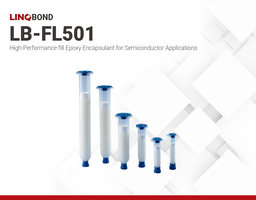
LINQBOND LB-FL501 | Fill encapsulant
- Fill
- Low CTE a1: 23 ppm/°C
- Easily flow, low viscosity
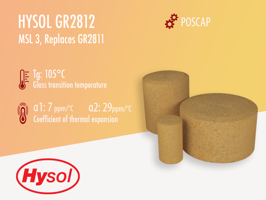
Hysol GR2812 | Gold Epoxy Mold Compound
- Replaces GR2811
- Thin wall crack resistance
- MSL3 260°C capability

LOCTITE GC 18
- SAC 305 - No refrigeration
- Low voiding
- Stencil Printable

Hysol GR350HT | Black Epoxy Mold Compound
- High Thermal Conductivity GR30
- Designed for TO92 and TO220 packages
- Excellent reliability under high temperature and bias


