
BMI-1500 Low Molecular Weight Bismaleimide Oligomer
Harmonization Code : 2925.19.95.90 | Carboxyimide-function compounds (including saccharin and its salts) and imine-function compounds : Imides and their derivatives; salts thereof : Other : Other : Other
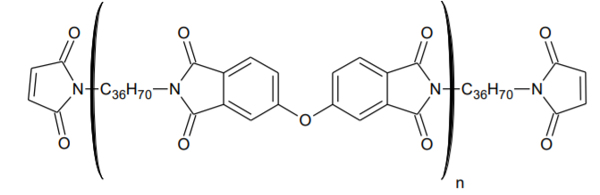
Main features
- Soluble in many reactive diluents
- High adhesion to various substrates
- Superior thermal stability
Product Description
BMI-1500 is an amorphous, low molecular weight bismaleimide oligomer that exhibits good adhesion to a variety of substrates. It can be homo-cured via UV or free radical initiators to form tough, hydrophobic, cross-linked polyimides. The material has excellent low pH hydrolytic resistance and thermal stability. The amorphous nature of this imide-extended BMI allows it to form room-temperature-stable solutions in a variety of free radical reactive diluents. It is soluble in many common solvents such as toluene, xylene, MIBK, etc.
BMI-1500 is recommended for use as an additive or base resin in adhesives that are designed for high temperature resistance. It has excellent adhesion to a variety of substrates. When used as a base resin, it can produce adhesives that are tough, flexible and demonstrate good peel strength.
BMI-1500
 No longer available
 No longer available
 Shipping in 2 weeks
Packaging
TDS, SDS & Technical Documents
- BMI 1500
- BMI 1500 SDS
Technical Specifications
General Properties
Thermal Properties
Other Properties
Physical Properties
Additional Information
BMI 1400 and BMI 1500 oligomers do not lend themselves to a similar "clean-up/purification" as we did with BMI-689. Despite that, 1400/1500 would likely benefit from the use of some coupling agents - especially as it relates to the post 85/85 adhesion values. These BMI resins are very hydrophobic and have high hydrolytic resistance, meaning water does not degrade the resin.
BMI resins, unless they are used with epoxies or other co-resins, do not have good adhesion to metals and they do have a large void volume. This void volume allows moisture to penetrate to the surface where the adhesion is not so good and further degrade it. However, with the proper use of coupling agents, the interface adhesion is improved and the 85/85 adhesion will follow.
What is the shelf life of the material?
DMI warrants the material for 1 year from the date of shipment when stored cold (+5ºC). This period is specified more to encourage customers to use the material and protect DMI from product returns as opposed to some chemical instability in the material. In fact, DMI stores the bulk BMI-1500 at room temperature prior to shipment. The absolute shelf life is many years - especially if stored cold and away from light - but we have never come up with a specific number of years.
What is the best temperature profile to thermally cure BMI-1500?
Recently viewed products

FM-0425 | Reactive PDMS - Monoterminal Hydroxy
- Mono terminal
- 10,000 g/mol | 160 mPas
- Hydroxy functional group
KESTER 186 Flux-Pen
- High thermal stability
- Improves soldering performance
- ROL1 per J-STD-004 & J-STD-004B

ABchimie 6025UV Soft Thixotropic Resin
- One-component
- Fast UV Curing
- Shock Absorbing
LOCTITE ABLESTIK 16-1LV
- Two components
- Room temperature cure
- Low volume resistivity
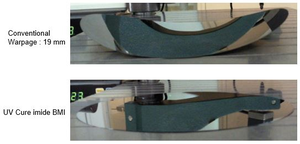
DMI-3006 Negative Type Solvent Developed Photosensitive Modified Polyimide Stress Buffer Coating
- No warpage of silicone wafer
- UV cured, no hard bake required
- Excellent dielectric properties
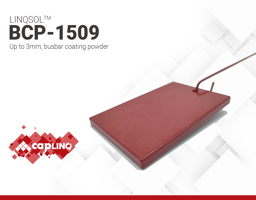
BCP-1509 | Medium voltage Busbar Coating Powder
- Reddish Brown Color
- Up to 3mm thickness
- RTI Class B
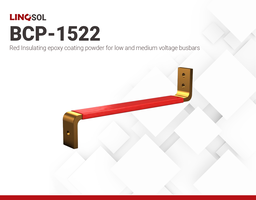
BCP-1522 | Medium voltage Busbar Coating Powder
- Low and medium voltage applications
- Suitable for applications up to 38 kV
- Optimized for fluidized bed coating process


