PTM 6000 | Phase Change Pad
Harmonization Code : 8473.30.80.00 | Parts and accessories (other than covers, carrying cases and the like) suitable for use solely or principally with machines of headings 8470 to 8472 ; Parts and accessories of the machines of heading 8471 ; Other; Other

Main features
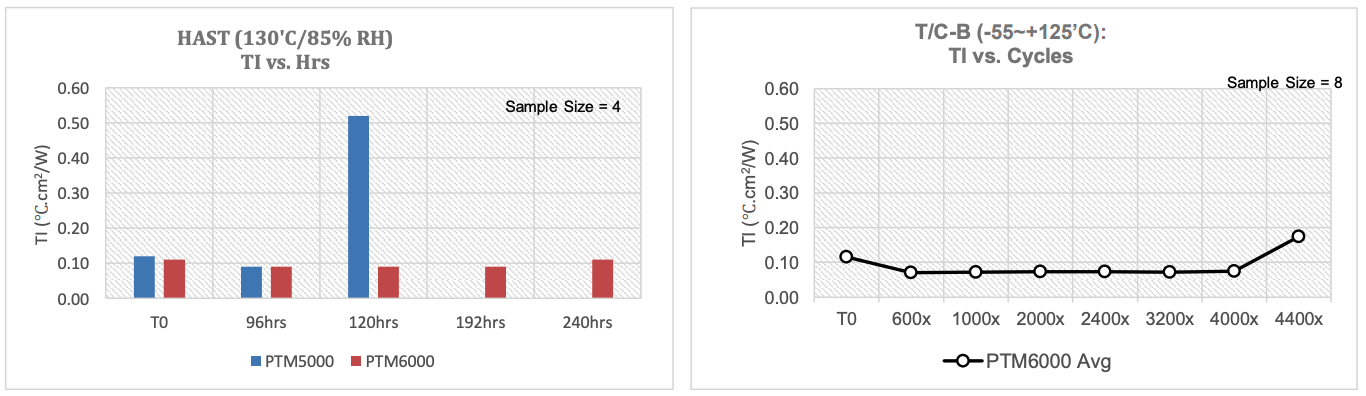
- Higher reliability than PTM5000
- 3.5 - 4.5 Thermal Conductivity
- Pad form
Product Description
PTM6000 has almost identical properties to PTM5000 but it is a higher reliability version . It is designed to minimize thermal resistance at interfaces and maintain extremely stable performance through reliability testing required for long product life applications. As with all Phase change materials, it has stable Thermal Impedance across accelerated aging tests and does not display bleed, pump or flow out. It can withstand temperatures up to 150°C.
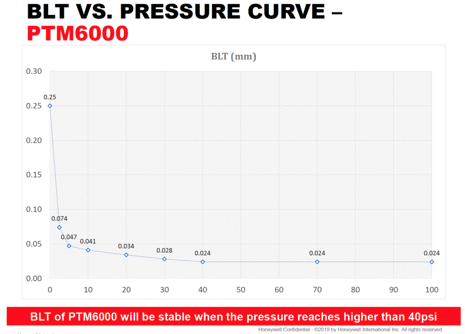
PTM6000 has a Thermal conductivity of 3.5 - 4.5 (W/m·K) depending on the bondline thickness and is based on a robust polymer PCM structure that exhibits excellent wetting properties during typical operating temperature ranges, resulting in very low surface contact resistance. The proprietary material provides superior reliability and maintains low thermal impedance (0.06-0.08) , making it desirable for high-performance integrated circuit devices.
PTM6000
Unlike other products we offer, the products listed on this page cannot currently be ordered directly from the website.
 Shipping in 8 weeks
Packaging
TDS, SDS & Technical Documents
- Honeywell PTM6000 SDS
- Honeywell_1907_2006 _SVHC Compliance_2024
- Honeywell PTM6000 TDS
- AppNotePad-R1-6
- TI vs Temperature of PTM6000
- CAPLINQ Honeywell Phase Change Material Pad Handling Guide
- CAPLINQ Honeywell Phase Change Material Troubleshooting Guide v2
Technical Specifications
General Properties
Thermal Properties
Electrical Properties
Additional Information
PTM6000 Dripping Test
A TIM dripping test is conducted on a Honeywell PCM to evaluate its thermal stability and mechanical integrity under evaluated temperatures and during applications that were positioned vertically. It assesses whether the PCM can maintain its position and effectiveness without dripping or flowing out of place when subjected to high temperatures.
- The PCM pellet samples were prepared with a diameter of 15mm and thickness of 2mm and 3mm. Sample pellets were placed on ceramic and copper substrates and secured vertically to simulate conditions where gravity could cause dripping.
- The samples were placed in an oven at 90°C and 105°C, respectively. They were maintained at the target temperature and inspected every 15 minutes for signs of dripping, flowing, or displacement.
- After heating for one hour, a visual inspection was performed to check for dripping or flow marks. The displacement or loss of TIM was measured to quantify the amount of material that had dripped or moved.
The dripping test shows the flow marks of the Honeywell PCM samples.
The results show good adhesion of PTM6000 on the ceramic surface under 90°C temperature, indicating low pump-out risk. The TIM remains in place without signs of dripping, sagging, or flowing away from the applied area for the 2mm & 3mm thick samples. The bond line between the TIM and substrate remains intact and uniform. However when PTM6000 was subjected under 105°C temperature, dripping were observed after 15 minutes of the test.
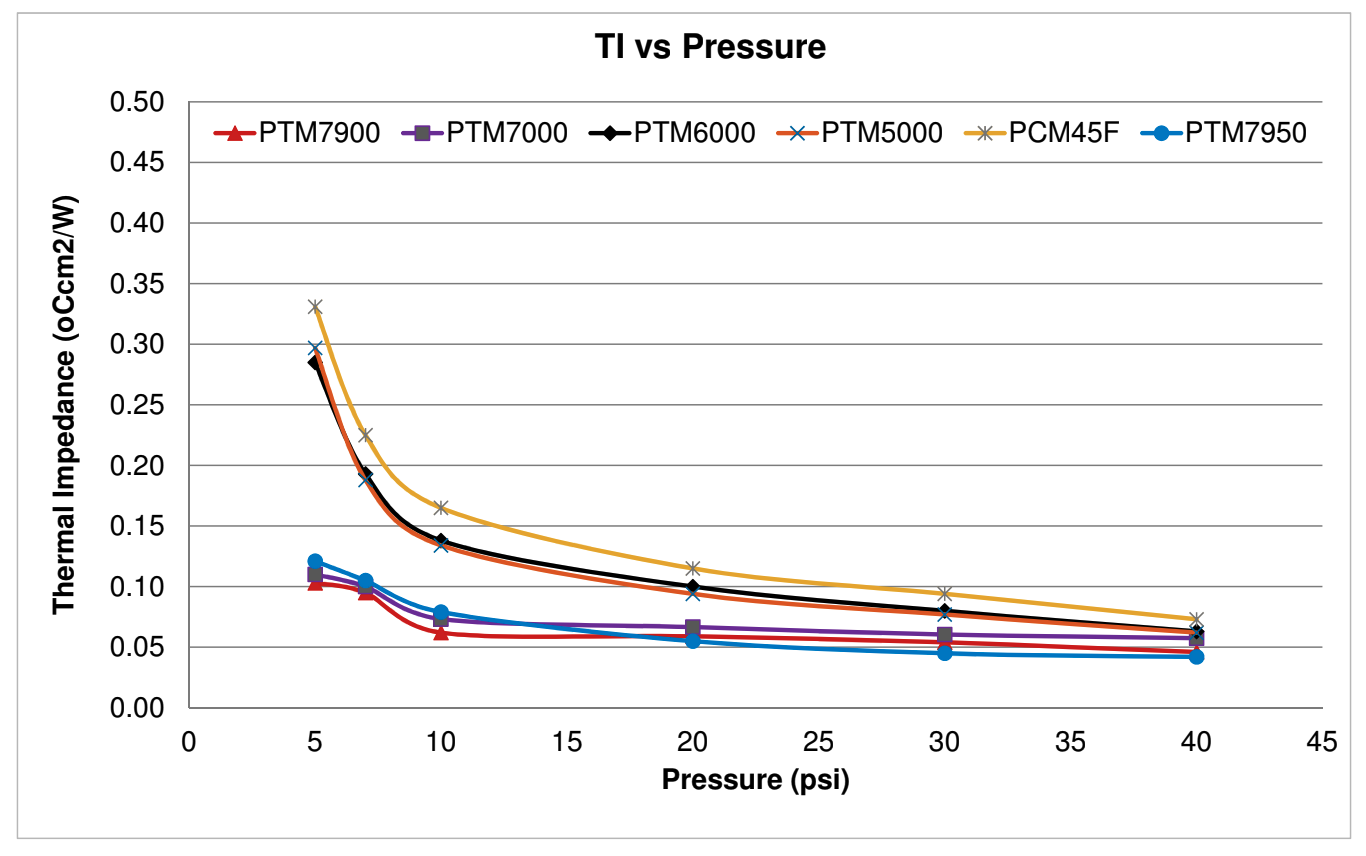
BLT vs TI for various Phase change materials
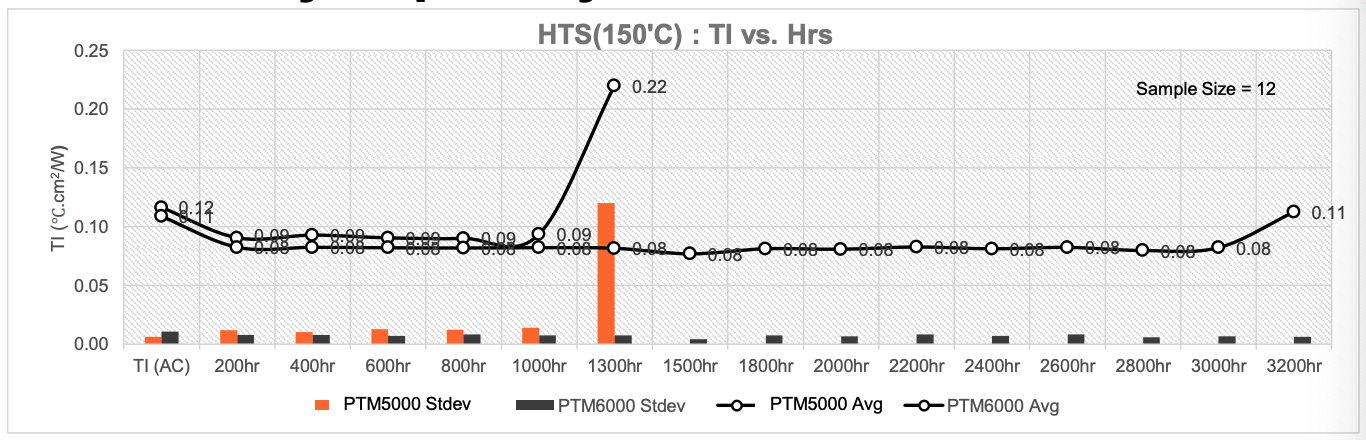
150°C HTS trend for PTM6000