
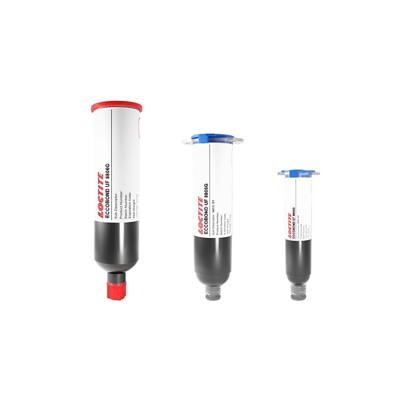
LOCTITE ECCOBOND UF8806G
Harmonization Code : 3907.30.00.85 | Polyacetals, other polyethers and epoxide resins, in primary forms; polycarbonates, alkyd resins, polyallyl esters and other polyesters, in primary forms : Epoxide resins : Other
Main features
- Reduced thermal stress
- Superior adhesion
- Excellent flow characteristics
Product Description
Henkel is discontinuing production of LOCTITE ECCOBOND UF 8806G and LOCTITE ECCOBOND UF 8806H as of September 30, 2024. The last date to place orders for the Product is June 30, 2024. Looking for direct alternatives? LOCTITE ECCOBOND UF 8830S is the closest standard material
LOCTITE ECCOBOND UF 8806G high flow, liquid encapsulant is designed to improve the thermal cycling and reliability performance of ceramic flip chip devices. It is formulated using a proprietary Moisture Resistant Cyanate Estser (MRCE) resin.
LOCTITE ECCOBOND UF 8806G will reduce thermal stress between substrate and chip interconnects. It will form a hard black colored polymer when sufficiently cured. This material is designed to achieve JEDEC Level 1 reliability standards with ceramic substrates
Cure Schedule
- 45 minute ramp to 195°C + 60 minutes @ 195°C
- 30 minute ramp to 165°C + 180 minutes @ 165°C
Packaging
TDS, SDS & Technical Documents
- ECCOBOND UF 8806G-EN
- 1203194_MSDS_UT_US_EN
- DOC 435 - Notification of LOCTITE ECCOBOND UF 8806G and LOCTITE ECCOBOND UF 8806H Discontinuation
- CAPLINQ Underfill Material Handling Guide
Technical Specifications
Thermal Properties
Physical Properties
Additional Information
Is there a recommended method for die depopulation?
We do not know of any “magic trick” or any easy process to remove packages with these underfills. UF8806G is based on Cyanate Ester chemistry, so it is different to epoxies such as UF3915 even though both products are very robust, and are designed to form a permanent bond.
There are no “solvents” that will easily dissolve the resin. Some acids should attack it (a heated mixture of concentrated Nitric + Sulphuric acid could work) but it is very hazardous and will also attack the board/substrate.
The only practical way to remove the packages (or chips) is to heat up to around 250°C (or at least sufficiently hot to melt the solder) and either twist the package or prise it upward to peel it away from the board/substrate.


