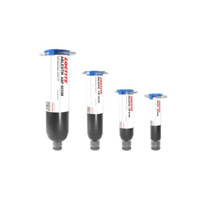
LOCTITE ABLESTIK 967-1
Harmonization Code : 3506.91.90.99 | Prepared glues and other prepared adhesives, not elsewhere specified or included; products suitable for use as glues or adhesives, put up for retail sale as glues or adhesives, not exceeding a net weight of 1 kg ; Adhesives based on polymers of headings 3901 to 3913 or on rubber; Other ; Other
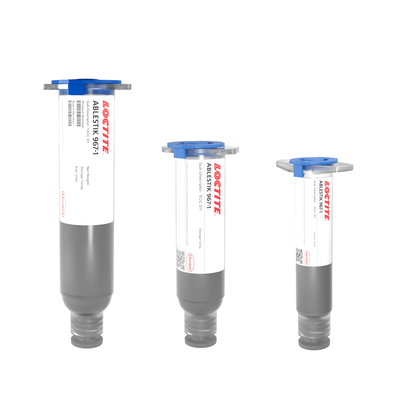
Main features
- Two components
- Low temperature cure
- Dispense and Screen print
Product Description
LOCTITE ABLESTIK 967-1 die attach adhesive is is designed for applications which require lower-than-normal cure temperatures. It is ideal for application by automatic dispenser, screen printing, or hand probe.
LOCTITE ABLESTIK 967-1 is an electrically conductive epoxy adhesive which reduces the risk to delicate components and increases manufacturing through-put with its quick, low temperature cure.
LOCTITE ABLESTIK 967-1 has an average and maximum silver particle size of 8 µm and 25 µm respectively. 967-1 was developed as a direct replacement for H20S and it has replaced it for many customers including defense and aerospace applications (NASA outgassing approved when cured for 2hrs at 100C).
Cure Schedule
- 6 hours @ 65°C
- 2 hours @ 80°C
- 30 minutes @ 120°C
- 15 minutes @ 150°C
967-1
Unlike other products we offer, the products listed on this page cannot currently be ordered directly from the website.
 Shipping in 20 days
 Shipping in 12 weeks
 Shipping in 12 weeks
Packaging
TDS, SDS & Technical Documents
- ABLESTIK 967-1-EN
- 1199532 SDS
- 967-1 Dispensing test
- 967-1 potlife RT and 40°C
Technical Specifications
Thermal Properties
Electrical Properties
Physical Properties
Additional Information
What is an acceptable viscosity change for die-attach dispensing?
Typically, we reckon that 25% change in viscosity is acceptable for die attach dispense processes. Based on this, 967-1 should be good for at least 8 hours (at 25°C). Please check the Technical documents section for more dispensing and pot life information.
LOCTITE ABLESTIK 967-1 TMA Curve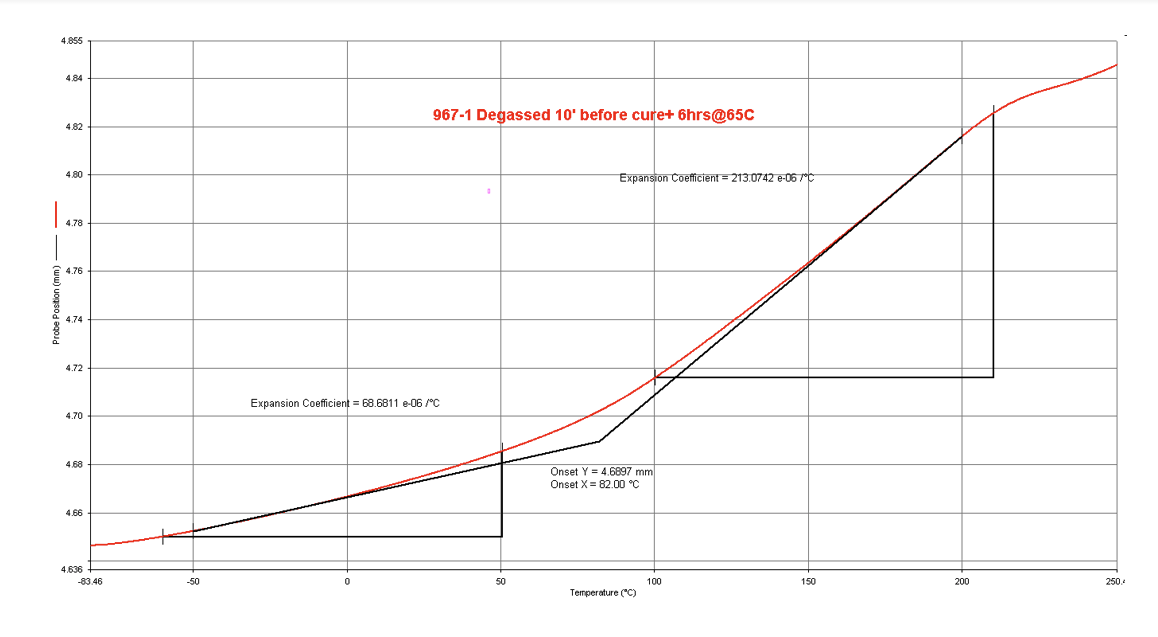 LOCTITE ABLESTIK 967-1 DMTA Curve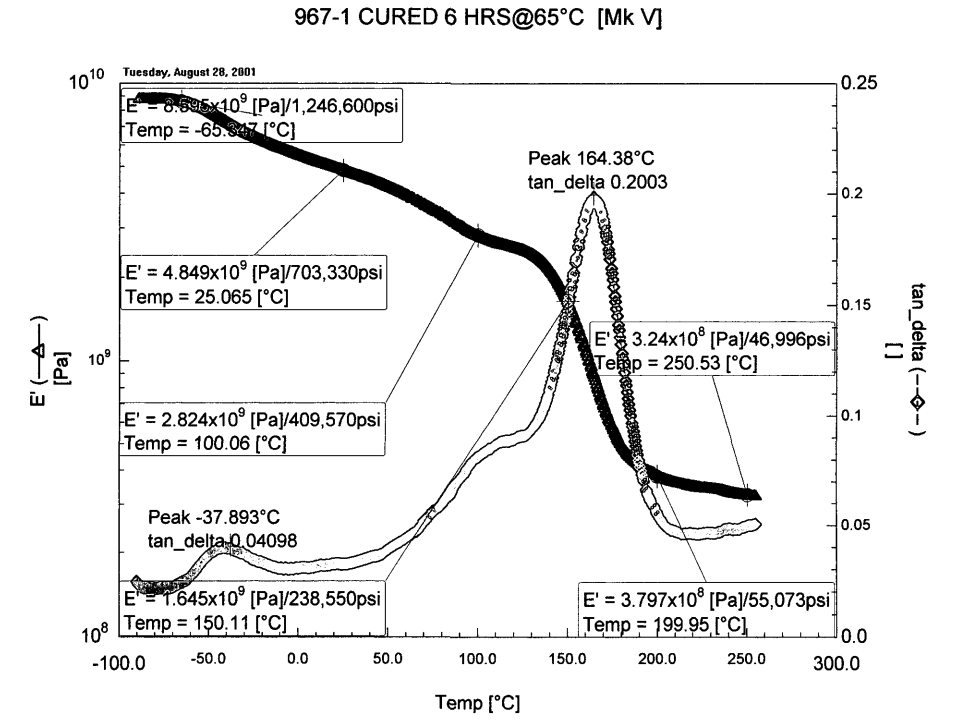
The Tg and modulus will increase as the cure temperature is increased. Tg & modulus are determined mainly by the organic (resin) properties.
The CTE should not change much if the cure temperature is increased. The CTE is determined mainly by the filler & filler content.