LOCTITE ABLESTIK ABP 2035SCR
Harmonization Code : 3506.10.00.00 | Prepared glues and other prepared adhesives, not elsewhere specified or included; products suitable for use as glues or adhesives, put up for retail sale as glues or adhesives, not exceeding a net weight of 1 kg
Main features
- Low stress
- Snap cure
- Good dispense behavior
Product Description
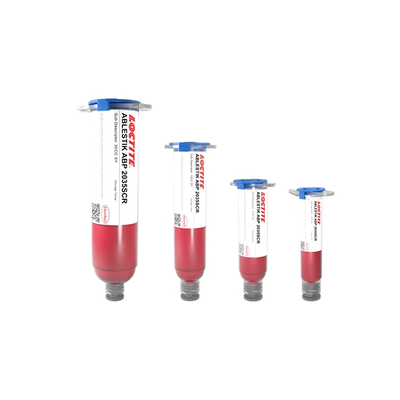
LOCTITE® ABLESTIK ABP 2035SCR non-conductive die attach adhesive has been formulated for use in high throughput die attach applications. This material is a direct replacement for its predecessors LOCTITE ABLESTIK 2033SC and LOCTITE ABLESTIK 2035SC. This BMI/Acrylic material is designed to minimize stress and resulting warpage between dissimilar surfaces. This adhesive has a maximum filler size of less than 25um and an average of less than 15um. Compared to its predecessors, it also has the benefit of improved compatibility with UV encapsulants.
LOCTITE® ABLESTIK ABP 2035SCR cures in low temperatures with high adhesion and excellent dispensing performance. It is ideal for ASIC attach and Lid/Cap attach of optical sensors and as a received die attach for 3d sensing modules. This material is not expected to pass very harsh reliability requirements.
LOCTITE® ABLESTIK ABP 2035SCR has been developed without DHCP. Though it is not banned for use, DHCP has been included on the Substances of Very High Concern (SVHC) list and could eventually be restricted for supply into Europe following future REACH and ECHA regulations. As is listed on the SDS of its predecessors LOCTITE ABLESTIK 2033SC and LOCTITE ABLESTIK 2035SC, DHCP is used as part of the formulation and therefore do contain substances on the SVHC list. So though there is no defined end date for use of ABP 2033SC or ABP 2035SC, when the DCHP substance in both would change from current SVHC list to Annex XIV list, there could be a 3-4 years sunset period on these older products. The "R" in the name thus stands for "REACH future proofing".
Cure Schedule
- 2 minutes @ 120°C
- 30 minutes @ 100°C
- 60 minutes @ 80°C
ABP2035SCR
Unlike other products we offer, the products listed on this page cannot currently be ordered directly from the website.
 Shipping in 35 days
 Shipping in 12 weeks
 Shipping in 35 days
Packaging
TDS, SDS & Technical Documents
- LOCTITE ABLESTIK ABP 2035SCR
- MSDS 1962053 en_GB
- LOCTITE ABLESTIK ABP 2035SCR RoHS declaration 01-22
- LOCTITE ABLESTIK ABP 2035SCR
- LOCTITE ABLESTIK ABP 2035SCR Data Package 03-15
- LOCTITE ABLESTIK ABP 2035SCR (German)
Technical Specifications
General Properties
Thermal Properties
Physical Properties
Additional Information
REACH and RohS FAQ
How can a product be unlisted for several years and then one day it becomes a concern without any composition changes?
We have set REACH regulation compliancy as very high priority. It can happen that MSDS reporting changes to be more strict in line with Regulations such as (EC) No 1907/2006 over time (and will continue to be) . Some DCHP substances are already listed in our MSDS for several years but they can appear above threshold with a simple regulatory change.
What testing and reporting methodology do you apply ?
Any DCHP substances are part of the uncured "as supplied" formulation and reported on MSDS as such. We also submit samples to SGS laboratories for additional reports.
How do you confirm that the other phthalates are under the threshold, even for ROHS ?
With third party RoHS reports showing all RoHS relevant substances with their measurements.
How do you manage the regulatory monitoring about Reach and ROHS ?
Our Product Safety and Regulation Affairs department is monitoring this and update MSDS’s where needed. Next to this, we do third party testing at SGS for volume runners based on specific customer requests.
Would you be able to anticipate the next regulation updates in order to propose your changes in advance ?
We’re following REACH and ECHA regulations closely. If a DCHP substance for instance would change from the SVHC list to Annex XIV list with sunset date 3-4 years ahead, MSDS will be updated and customers will be informed to consider alternative options.
What are the differences between 2033SC and ABP 2035SCR since it contains less DCHP ?
Please check the TDS’s of both 2033SC and ABP 2035SCR next to the slide on ABP 2035SCR below highlighting the benefits. Several other "smart card module makers" already changed from 2033SC to ABP 2035SCR and others are considering this. We are not aware of any negative aspects on ABP 2035SCR vs 2033SC so far.