
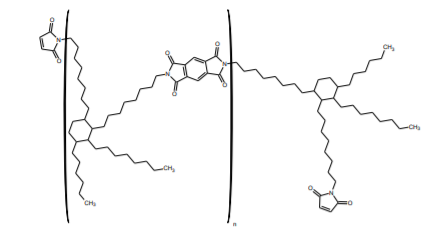
BMI-6000 Imide-extended Bismaleimide Oligomer
Harmonization Code : 2925.19.95.90 | Carboxyimide-function compounds (including saccharin and its salts) and imine-function compounds : Imides and their derivatives; salts thereof : Other : Other : Other
Main features
- Superior thermal stability
- Good dielectric properties
- Toughener
Product Description
BMI-6000 has been designed as a curable, low DK and Df alternative to replace both the Kapton and adhesive layers in the manufacture of FCCL materials. The material has excellent thermal stability and workability. It is soluble in a variety of solvents such as cyclopentanone, cyclohexanone, MEK, DMF, DMAC, and NMP in combination with aromatic solvents. It can be processed in a resin system as a solid or dissolved in a solvent.
BMI-6000 is recommended for use as an adhesive layer when laminating materials for FCCL applications. Adhesion promoters, solvent(s), are required for successful use. BMI6000 has much higher Tg than products such as BMI-689 and require thermal curing to obtain the published values. This material is not suitable for UV curing.
Aromatic BMI resins lose some of their user-friendly nature compared to the aliphatic versions: they are less soluble in normal solvents, less compatible with other resins, require more complicated curing processes, etc.
BMI-6000
 No longer available
 No longer available
 Shipping in 2 weeks
Packaging
TDS, SDS & Technical Documents
- BMI 6000
- BMI 6000 SDS
Technical Specifications
General Properties
Thermal Properties
Additional Information
What are the main differences with BMI 6100?
- The reaction to form the product is performed in anisole and for economy, we prefer to leave it in anisole
- We are unable to precipitate this higher molecular weight material to form a solid powder - it forms a gooey mess.
Recently viewed products

LOCTITE SF 7360
- Low odor
- Stencil and Nozzle cleaner
- Compatible with epoxy adhesives
KESTER 958 Soldering Flux
- Excellent for bare copper applications
- Conformal coating compatible
- Improves soldering performace
ITO-175 | 175 μm Indium Tin Oxide film
- 85% Light transmittance
- 175um thickness
- Ease of processing
LINQCELL SFP 600 | Stainless Steel Sintered Fiber Felt
- 0.6mm - 600um - 23.6 mil
- Superior filtration
- Purification and dust collection
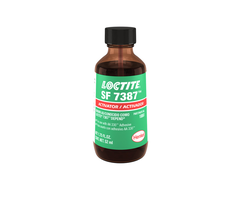
LOCTITE SF 7387
- Activator
- Very low viscosity
- Promote cure of acrylic adhesives

FM-DA26 | Reactive PDMS - Monoterminal Hydroxy (Diol)
- Mono terminal
- 15,000 g/mol | 500 mPas
- Hydroxy (Diol) functional group
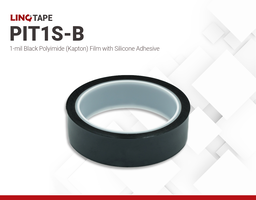
PIT1S-B | 1-mil Black Polyimide (Kapton) tape with Silicone Adhesive
- 1 mil polyimide Film
- Opaque black color through the film
- 3000V Breakdown Voltage


