
DOWSIL™ 3-1953 Conformal Coating
Harmonization Code : 3910.00.00.90 | Silicones in Primary Forms; Others

Main features
- One-part, solventless silicone conformal coating
- UV indicator for inspection and quality assurance
- Soft, stress-relieving elastomer after cure
Product Description
DOWSIL™ 3-1953 Conformal Coating is a solventless, elastomeric silicone coating designed to protect printed circuit boards and electronic assemblies in lighting, industrial, and automotive applications. It provides reliable protection against moisture, corrosion, thermal cycling, and environmental contaminants while maintaining electrical insulation performance. The coating cures at room temperature through exposure to atmospheric moisture and forms a flexible elastomer that helps protect electronic assemblies under demanding operating conditions.
Key features
- Solventless silicone system - 100% silicone elastomer with no solvent carrier.
- Low-to-medium viscosity - Supports spray, dip, and selective coating application methods.
- Room-temperature cure - Cures through solvent evaporation followed by silicone crosslinking to form a durable elastomer.
- Flexible elastomer after cure - Helps reduce mechanical stress on solder joints and electronic components.
- Excellent environmental protection - Helps protect against moisture, corrosion, dust, and industrial contaminants.
- Electrical insulation performance - Provides reliable dielectric protection for electronic assemblies.
- UV indicator - Enables visual inspection and verification of coating coverage under UV light.
Applications
DOWSIL™ 3-1953 Conformal Coating is suitable for electronic assemblies where solvent-based silicone coating, uniform coverage of printed circuit boards, and UV-assisted coating inspection are part of the application review.
- Rigid and flexible circuit boards: suitable for protective coating of printed circuit boards and PCB system applications.
- PCB assembly protection: supports environmental protection, corrosion resistance, and dielectric protection requirements.
- Sensitive electronics and fine-pitch designs: suitable for tightly spaced geometries where low-viscosity flow is required to achieve uniform coverage.
Related resources
DS-31953
Unlike other products we offer, the products listed on this page cannot currently be ordered directly from the website.
 Shipping in 5 weeks
Packaging
TDS, SDS & Technical Documents
- 11-3046-01-dowsil-3-1953-conformal-coating
- DOWSIL™ 3-1953 Conformal Coating-Safety Data Sheet-EN
Technical Specifications
General Properties
Physical Properties
Mechanical Properties
Electrical Properties
Thermal Properties
Additional Information
DOWSIL™ 3-1953 RTV Coating
DOWSIL™ 3-1953 Conformal Coating is a solvent-based silicone conformal coating designed to protect printed circuit boards and electronic assemblies from moisture, corrosion, thermal cycling, and environmental contaminants. The coating features a low viscosity that enables uniform application across complex geometries and cures at room temperature primarily through solvent evaporation followed by silicone cure.
Review the technical data sheet and SDS before handling, processing, or qualifying the material.
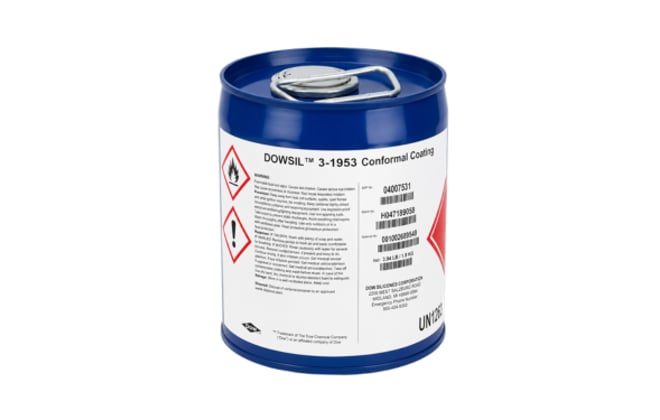
Silicone Conformal Coating for Electronic Protection
DOWSIL™ 3-1953 RTV Coating cures upon exposure to atmospheric moisture, eliminating the need for solvent evaporation during processing. Its room-temperature cure can be accelerated with mild heat to support faster production cycles. The coating's high-viscosity, self-leveling formulation is suitable for a range of application methods and provides consistent coverage of electronic assemblies.
As a cured elastomer, DOWSIL™ 3-1953 RTV Coating delivers excellent flexibility and low-modulus properties, helping to minimize mechanical stress on sensitive components, solder joints, and interconnections during thermal cycling and environmental exposure.
Key features
- Room-temperature cure - Cures through solvent evaporation followed by silicone crosslinking.
- Solvent-free formulation - 100% solids silicone system with no solvents or by-products.
- Low viscosity coating - Supports spray, dip, and selective coating application methods
- Flexible elastomer after cure - Shore A 36 material reduces mechanical stress on sensitive components and solder joints.
- UV indicator - Facilitates inspection and verification of coating coverage under UV light.
- Reliable environmental protection - Provides resistance to moisture, corrosion, and contaminants in harsh environments.
Processing summary
Product Documents and Dow Coating Resources
Review the technical data sheet for typical product properties, the safety data sheet for handling and storage requirements, and the Dow conformal coatings selection guide for broader context on the coating family.
Use the selection guide to compare DOWSIL™ conformal coating options by viscosity, cure profile, hardness, and agency listing context.
The Dow conformal coatings selection guide explains how silicone coatings are positioned by viscosity, cure profile, hardness, stress relief, abrasion resistance, UV inspection, and agency listing context. It also includes a solventless coating section for applications where reducing solvent-handling complexity is a key selection driver, along with comparison tables for solventless RTV, solventless heat-cure, and solvent-based RTV conformal coatings.
Performance Properties
Cure basis and test conditions are per technical data sheet unless otherwise stated.
| Property | Typical value | Unit |
|---|---|---|
| One or Two Part | One | |
| Color | Translucent | |
| Viscosity | 350 350 0.4 |
cP mPa-sec Pa-sec |
| Specific Gravity (Cured) | 0.98 | |
| NVC (Non Volatile Content) | 99.4 | % |
| Tack-Free Time at 25ºC | 8 | minutes |
| Tack-Free Time at 60ºC/15% RH | 0.5 | minutes |
| Tensile Strength | 80 0.5 5 |
psi MPa kg/cm2 |
| Elongation | 60 | % |
| Durometer Shore A | 34 | |
| Dielectric Strength (JIS K 6249) | 3 | Volts/mil kV/mm |
| Dielectric Strength | 425 17 |
ohm*cm |
| Volume Resistivity (JIS K 6249) | 5.5 E15 | |
| Dissipation Factor at 100 Hz | 0.0007 | |
| Dissipation Factor at 100 kHz | < 0.0002 | - |
| Hardening Transition by DSC | -56.2 -49 |
F °C- |
| UL Flammability Classification | 94 V-0 | - |
| Mil Specification | Mil I-46058C Amend 7 | - |
| Agency Listing | IPC-CC-830A with Amendment 1, UL 746E |
- |
| Cyclotetrasiloxane (D4) content | < 0.1 | % |
Where DOWSIL™ 3-1953 fits
Tips and troubleshooting
| Issue | Recommended action |
|---|---|
| Air entrapment or voids |
|
| Adhesion below target |
|
| Curing |
|
| Moisture exposure during storage |
|
| Repair or rework requirement |
|
Frequently asked questions about DOWSIL™ 3-1953 RTV Coating
What is DOWSIL™ 3-1953 RTV Conformal Coating used for?
It is used as a protective conformal coating for rigid and flexible circuit boards and PCB system applications, particularly where flexibility, abrasion resistance, dielectric protection, and room temperature cure are part of the application review.
How does this coating cure?
DOWSIL™ 3-1944 RTV Coating can be applied through brush, flow coat, or needle/dispense. It cures by atmospheric moisture at room temperature. Mild heat can be used to accelerate processing after sufficient solvent flash-off.
Which application methods are supported?
DOWSIL™ 3-1944 RTV Coating can be applied through brush, flow coat, or needle/dispense. Process fit should be confirmed against the target wet-film thickness, board layout, masking approach, and keep-out areas.
What does the UV indicator confirm?
The UV indicator supports inspection of coating presence. It should not be treated as proof of final dry-film thickness, full cure, adhesion, absence of defects, or long-term electrical reliability.
Review DOWSIL™ 3-1953 for your conformal coating application
Recently viewed products
HumiSeal Thinner 905
- For rapid cure applications
- Fast evaporation rate
- For faster recoat process
ABchimie836UV Soft Dual Cure Conformal Coating
- One Component
- Dual Cure (UV and Humidity)
- Excellent Moisture Resistance
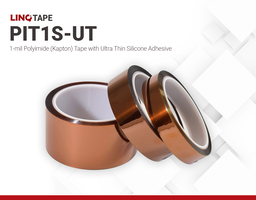
PIT1S-UT | 1-mil Polyimide (Kapton) Tape with 0.5mil Silicone Adhesive
- 1 mil polyimide film
- 0.5 mil Silicone adhesive
- >6,800V breakdown voltage

HumiSeal Thinner 901
- Low toxicity
- BTX-free
- Compatible with multiple coatings
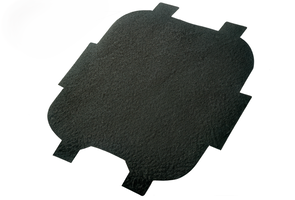
COOLINQ SG-25 | Graphite heat spreader
- 25um Graphite
- Light weight and flexible
- Excellent thermal conductivity
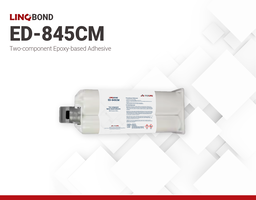
ED-845CM | Fast-curing Epoxy Adhesive for Electronics Bonding
- Fast-curing
- Excellent adhesion
- High insulation, chemical resistance and anti-vibration
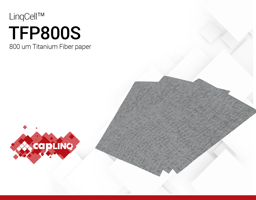
LINQCELL TFP800S | 800um Titanium Fiber Paper
- 0.80mm - 800um - 31.5mil
- 60 - 70% Porosity
- Electrode and Support structure
DMI-3850 | Low outgassing adhesive
- UV Cure
- Space applications
- Virtually no outgassing


