LTM 6300-SP | Phase Change Paste
Harmonization Code : 8547.90.00.00 | Insulating fittings for electrical machines, appliances or equipment, being fittings wholly of insulating material apart from any minor components of metal (for example, threaded sockets) incorporated during moulding solely for purposes of assembly, other than insulators of heading 8546; electrical conduit tubing and joints therefor, of base metal
Main features
- 0.12 - 0.14 Thermal Impedance
- 1.8 - 2.4 Thermal Conductivity
- Highest volume resistivity
Product Description
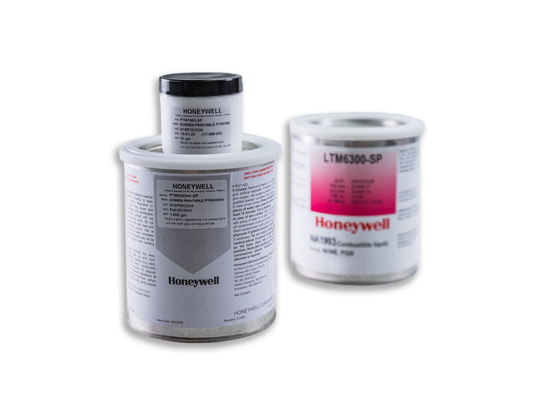
LTM6300-SP is the entry level Honeywell's thermally conductive phase change Stencil printable paste. This paste is designed to minimize thermal resistance at interfaces and maintain extremely stable performance through reliability testing required for long product life applications. In addition to that it has excellent electrical properties and the highest volume resistivity of the entire phase change product line.
LTM6300-SP has a Thermal conductivity of 1.8 - 2.4 (W/m·K) depending on the bondline thickness and is based on a robust polymer PCM structure that exhibits excellent wetting properties during typical operating temperature ranges, resulting in very low surface contact resistance. The proprietary material provides superior reliability and maintains low thermal impedance (0.12-0.14) , making it desirable for high-performance integrated circuit devices.
LTM6300-SP
1. Select Package Type
Catalog Product
Unlike other products we offer, the products listed on this page cannot currently be ordered directly from the website.
Product availability  Shipping in 8 weeks
Shipping in 8 weeksPackaging
Please select Package Type before adding your product to your cart.
TDS, SDS & Technical Documents
- Stencil Print TIM Application Notes
- PCM Series_TDS_2023
- CAPLINQ Honeywell Phase Change Material Troubleshooting Guide v2
Technical Specifications
General Properties
Specific Gravity Specific Gravity
1.8 Thickness range Thickness range
0.20 - 1.00 mm Thermal Properties
Thermal Conductivity Thermal Conductivity
1.8 - 2.4 W/m.K Thermal Impedance Thermal Impedance
0.12 - 0.14 °C·cm²/W Electrical Properties
Volume Resistivity Volume Resistivity
3000000000000000 Ohms⋅cm Additional Information
When choosing a printable paste it is important to understand the process parameters and limitations.
That's why we ask, when you contact us, to include the following information:
- What is your print thickness?
- How long is your printing time and working window?
- What is your drying step after printing?
- Temperature (Room temperature or something else?)
- Time
- Do you have any viscosity limitations in the printing process?