
DOWSIL™ TC-2022 Thermally Conductive Adhesive
Harmonization Code : 3910.00.00.90 | Silicones in Primary Forms; Others
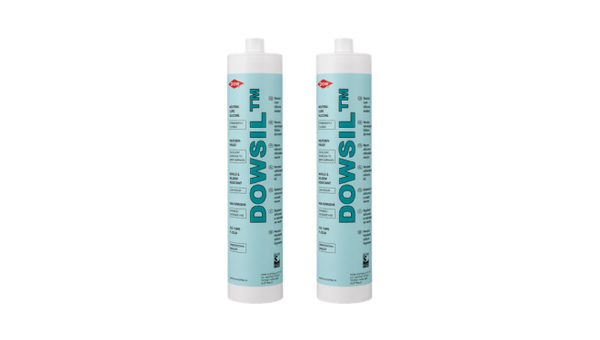
Main features
- Heat curable at moderate temperatures
- Cost effective with rapid/low temperature cure
- Applicable on heat-sensitive substrates and components
Product Description
DOWSIL™ TC-2022 Thermally Conductive Adhesive is a one-part, heat-curable silicone adhesive designed for electronic assemblies that require both reliable bonding and efficient heat transfer. With 1.7 W/m·K thermal conductivity, integrated 7 mil glass beads for controlled bondline thickness, and primerless adhesion to many metals, ceramics, laminates, and filled plastics, TC-2022 is well suited for heat sink attachment, integrated circuit substrate bonding, lid attach, housing adhesion, and PCB thermal management applications. Its solvent-free, no-mix formulation supports simplified dispensing and improved processing efficiency, while the silicone chemistry provides dielectric insulation, environmental protection, and stress relief against thermal cycling, shock, and vibration.
Product Key Features
- One-part silicone adhesive
- 1.7 W/m·K thermal conductivity
- Integrated 7 mil glass beads
- Rapid heat cure
- Primerless adhesion
- Solvent-free formulation
- Excellent dielectric insulation
- Stress-relieving silicone chemistry
- Wide operating temperature capability
- Compatible with automated dispensing
DS-TC2022
Unlike other products we offer, the products listed on this page cannot currently be ordered directly from the website.
 Shipping in 5 weeks
Packaging
TDS, SDS & Technical Documents
- 11-3712-01-dowsil-tc-2022-conductive-adhesive
Technical Specifications
General Properties
Physical Properties
Thermal Properties
Additional Information
DOWSIL™ TC-2022: One-Part Thermally Conductive Silicone Adhesive
DOWSIL™ TC-2022 Thermally Conductive Adhesive is a one-part, gray, heat-curable silicone adhesive designed for electronic assemblies requiring both thermal transfer and reliable structural bonding. With 1.7 W/m·K thermal conductivity, no mixing requirement, and integrated 7 mil glass beads for bondline control, TC-2022 supports efficient heat flow in compact PCB modules, IC packages, heat sink assemblies, lids, and housings.
Thermal bonding without two-part mixing — TC-2022 combines 1.7 W/m·K thermal conductivity, primerless adhesion to many substrates, and moderate-temperature heat cure for electronics manufacturing.
The silicone-based formulation helps transfer heat away from PCB module components while providing durable dielectric insulation, environmental protection, and stress relief across a broad operating temperature range.
Reliable thermal attachment for electronic assemblies — suitable for heat sink attach, IC substrate bonding, lid attach, housing adhesion, and automated or manual dispensing processes.
As electronic modules become smaller and more power-dense, TC-2022 provides a bonded thermal path that helps improve heat dissipation and assembly reliability.
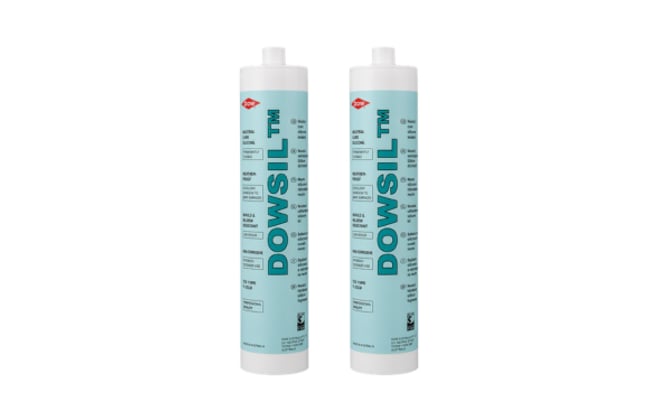
1.7 W/m·K Thermal Conductivity • One-Part System • 7 mil Glass Beads • 15 min Cure at 100 °C
Features & Benefits
- One-part formulation — no separate mixing required.
- Thermal conductivity of 1.7 W/m·K — supports heat transfer from components.
- 7 mil glass beads — helps control bondline thickness.
- Moderate-temperature heat cure — 15 minutes at 100 °C.
- No added solvents — supports cleaner processing.
- Primerless adhesion — bonds to many metals, ceramics, laminates, and plastics.
- Silicone durability — provides stress relief, environmental protection, and dielectric insulation.
Typical Applications
- Heat sink attachment on PCB assemblies.
- Bonding integrated circuit substrates.
- Lid attach for electronic packages.
- Housing and enclosure adhesion.
- Thermal attachment in power electronics and control modules.
- Automated or manual dispensing applications.
Thermal Challenges in Compact Electronic Modules
Modern PCB assemblies, power modules, and semiconductor packages continue to become smaller while carrying higher power loads. This creates a need for thermal interface materials that can move heat away from sensitive components while also supporting mechanical attachment. DOWSIL™ TC-2022 helps address these challenges by combining thermal conductivity, structural adhesion, dielectric protection, and silicone stress relief in a one-part adhesive system.
Engineering Data for DOWSIL™ TC-2022
| Property | DOWSIL™ TC-2022 | Condition / Note |
|---|---|---|
| Chemistry | Polydimethylsiloxane / Aluminum Oxide | Silicone-based adhesive |
| One or Two-Part | One-part | No mixing required |
| Color | Gray | Typical appearance |
| Viscosity | 190,000 cP / 190 Pa·s | Typical value |
| Specific Gravity, Cured | 2.7 | Typical value |
| Thermal Conductivity | 1.7 W/m·K | 0.98 BTU/hr-ft-°F |
| Heat Cure Time | 15 minutes | At 100 °C, time at bondline temperature |
| Durometer | Shore A 90 | Typical cured hardness |
| Lap Shear Adhesion, Aluminum | 600 psi / 4.1 MPa | Unprimed adhesion |
| Linear CTE | 125 ppm/°C | By TMA |
*Typical properties are not intended for specification writing. Verify suitability under actual application and processing conditions.
Where DOWSIL™ TC-2022 Fits
- Power modules
- Control boards
- Industrial electronics
- IC packages
- Semiconductor modules
- Compact PCB assemblies
- Electronic housings
- Module covers
- Chassis thermal paths
Dispensing, Bonding & Cure
Dispensing
TC-2022 can be used with automated or manual dispensing processes. Its one-part format eliminates separate component mixing.
Bondline Control
Integrated 7 mil glass beads help maintain a controlled bondline thickness for consistent thermal and mechanical performance.
Curing
Recommended cure is 15 minutes at 100 °C, measured once the adhesive and bondline reach the target temperature. Cure can be accelerated with additional temperature and time.
How TC-2022 Compares to Other Thermal Interface Options
| Common Limitation | DOWSIL™ TC-2022 Benefit |
|---|---|
| Thermal grease requires mechanical fastening and may not provide structural support. | TC-2022 provides a bonded thermal interface with adhesive strength. |
| Two-part adhesives require mixing and ratio control. | One-part format simplifies processing and reduces mixing-related errors. |
| Rigid adhesives can transfer stress to sensitive components. | Silicone chemistry provides stress relief against shock, vibration, and thermal expansion mismatch. |
| Uncontrolled bondline thickness can create inconsistent thermal performance. | 7 mil glass beads help maintain a controlled adhesive bondline. |
Tips & Troubleshooting
| Issue | Recommended Action |
|---|---|
| Insufficient Adhesion |
|
| Poor Thermal Performance |
|
| Incomplete Cure |
|
| Adhesion to Low-Energy Plastics |
|
Technical Help for Electronics Thermal Management
- Review dispense strategy and bondline requirements.
- Assess heat cure profile and time-at-temperature needs.
- Support process validation for manual or automated dispensing.
- Evaluate heat sink, lid, substrate, or housing bonding requirements.
- Review substrate compatibility and adhesion risk.
- Discuss thermal-management targets for electronic assemblies.
Ready to Evaluate DOWSIL™ TC-2022?
```
Recently viewed products

PIT1N-B | 1-mil Black Polyimide (Kapton) Film
- 1 mil thick black polyimide film
- No adhesive
- >2,800 breakdown voltage

Glass Repellency Treatment
- For making glass surfaces hydrophobic and oleophobic
- 2-20 nm thickness
- Easy to apply, optically clear and ultra thin
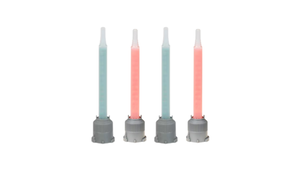
3M™ Scotch-Weld™ EPX Mixing Nozzle
- Simultaneous metering, mixing, and application in one step
- Used nozzle doubles as a cartridge storage seal between uses
- Compatible with 3M EPX manual and pneumatic applicators

VCF-4S200K | LINQSTAT 4 mil - 200,000 Ω/sq Antistatic film
- 4 mil - 100um - 0.1mm
- 200,000 ohms/sq Surface resistivity
- Not volume conductive


