
PTM 7950-SPS | Phase Change Paste
Harmonization Code : 8473.30.80.00 | Parts and accessories (other than covers, carrying cases and the like) suitable for use solely or principally with machines of headings 8470 to 8472 ; Parts and accessories of the machines of heading 8471 ; Other; Other

Main features
- 0.04 Thermal Impedance
- 8.5 Thermal Conductivity
- Slow drying solvent
Product Description
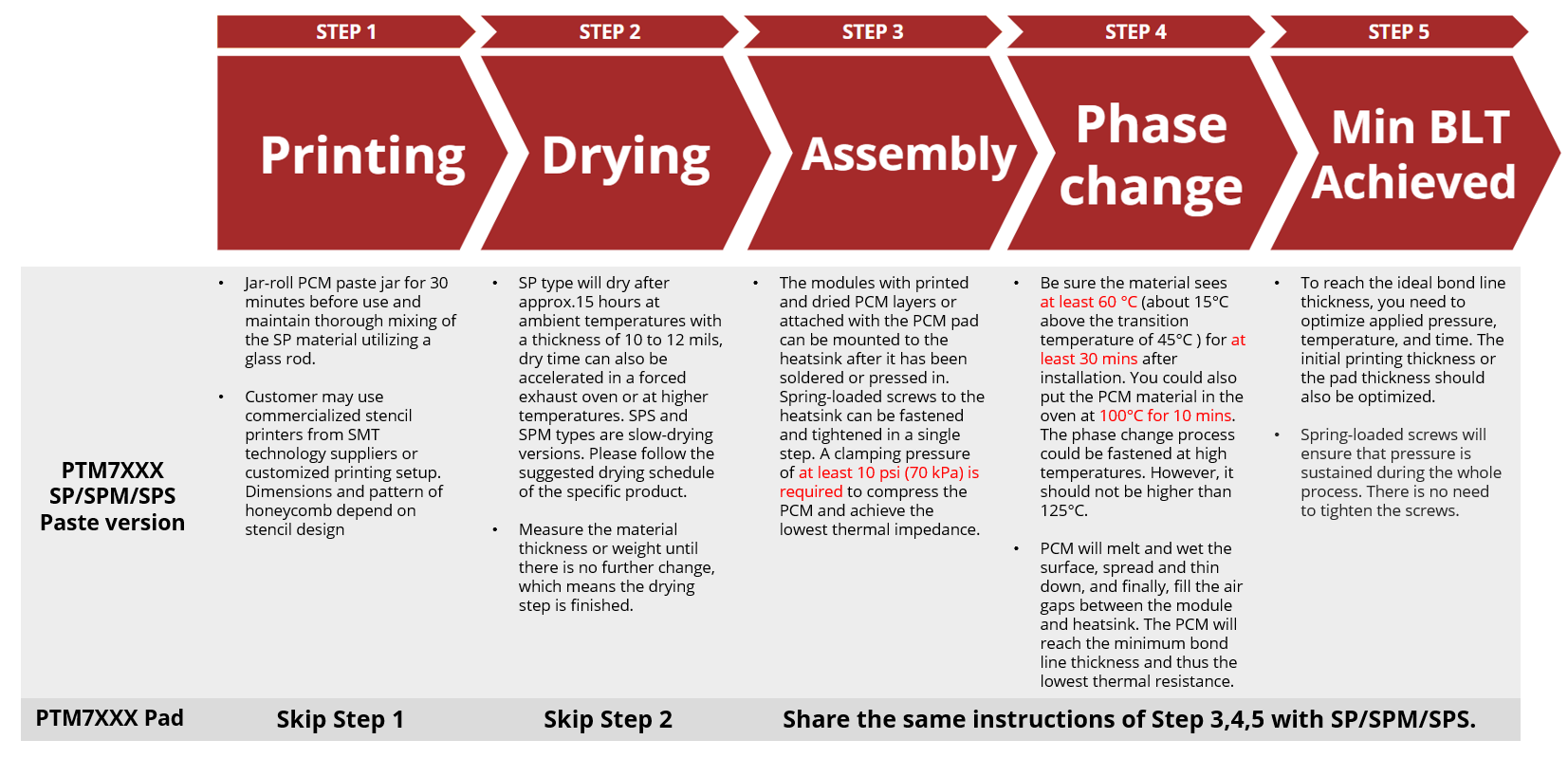
PTM7950SPS is an identical version of PTM7950-SP but with a slow drying solvent (S). PTM7950SPS is the paste version of PTM7950, a super highly thermally conductive Phase Change Material (PCM). It is designed to minimize thermal resistance at interfaces, maintain excellent performance through reliability testing, and provide scalable application at a competitive cost. Based on a novel polymer PCM system, PTM7950 exhibits excellent interface wettability during typical operating temperature ranges, resulting in extremely low surface contact resistance. PTM7950SPS is designed for automatic stencil printing manufacturing process, which largely helps with productivity and could be printed as low as 0.1mm. Check the comparison with pad version, PTM7950SPS needs extra drying steps after being printed and before assembly. Also, PTM7950SPS requires longer time for drying compared with standard PTM7950SP.
Available Versions: (Check the difference between pad and paste version)
- PTM7950 Pad, easy apply and no drying steps
- PTM7950-SP, paste version for automatic stencil printing
- PTM7950-SPS, paste version with slow drying solvent
Key Features:
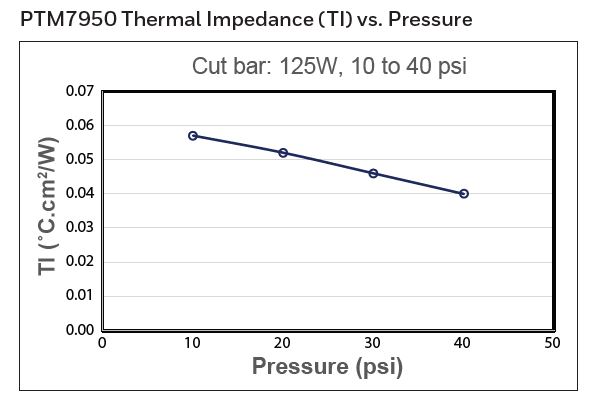
- Super low thermal impedance (TI vs Pressure Curve PTM7950)
- Silicone-free, no pump out, bleed out, dry out issue
- Industry proven superior long-term reliability (Reliability Report PTM7950)
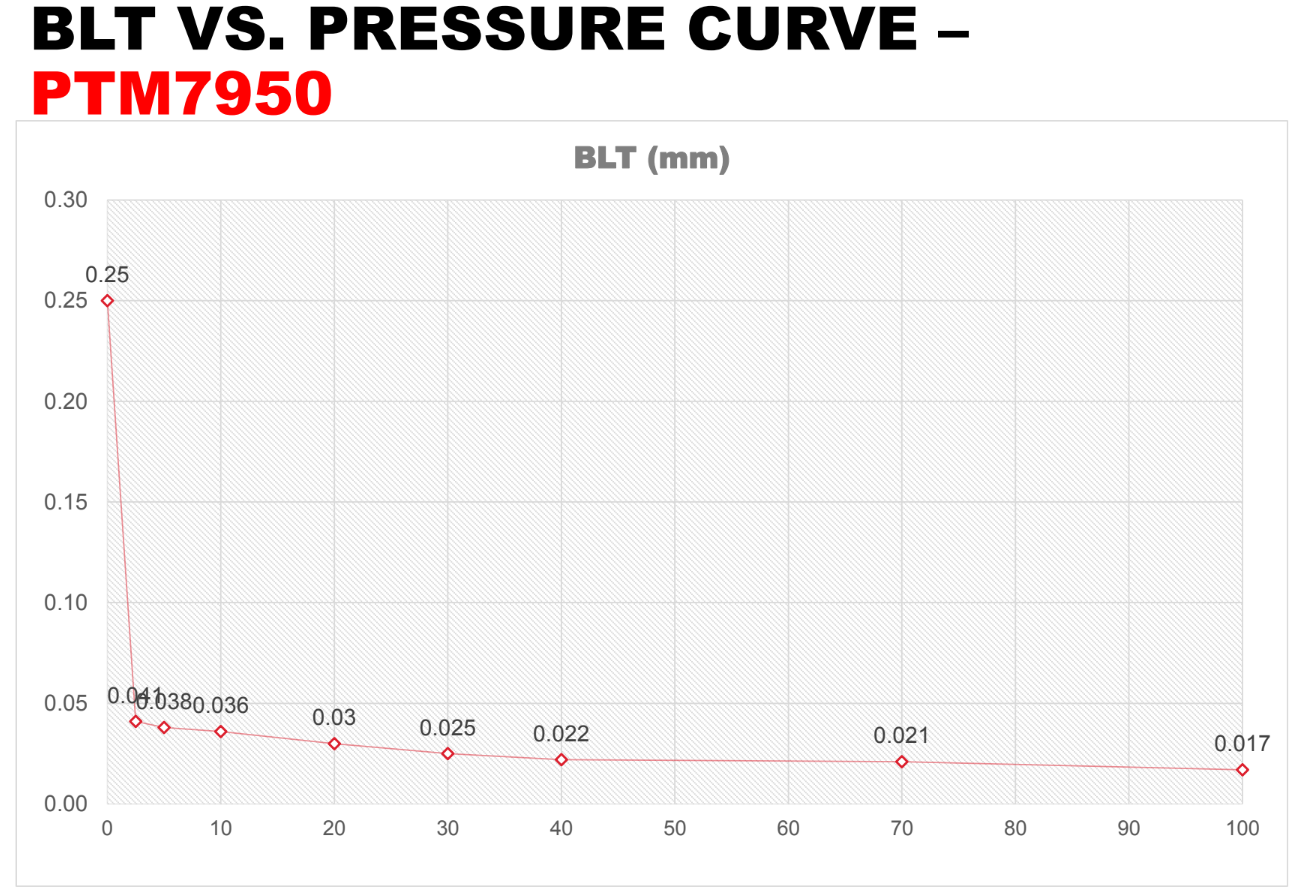
- Min BLT~20um, typical BLT is below 50um (BLT vs Pressure Curve PTM7950)
- 30~40 psi pressure is needed for usage (PCM Application Note)
Highly Recommend For:
- Power modules/inverters in e-mobility and power distribution
- High performance IT/enterprise computing devices
- Consumer electronics, high performance IC
- High power LED applications
Know More about PTM7950's superior thermal performance and long-term reliability.
Drying Schedule:
- 10 mins at 120°C or
- 25 mins at 100°C or
- 48 hours at Room temperature
PTM7900 and PTM7950 are closely related thermal interface materials with slight differences in performance. PTM7950 features a softer composition, higher thermal conductivity, and lower thermal impedance, enhancing its overall thermal performance. Aside from these improvements, both materials share similar characteristics.
PTM7950SPS
Unlike other products we offer, the products listed on this page cannot currently be ordered directly from the website.
 Shipping in 8 weeks
Packaging
TDS, SDS & Technical Documents
- Honeywell PTM79XX-SP SDS
- Honeywell_PTM7950 Reliability Report_RevC
- PTM7950-SPS_TDS
- PTM7950-SPS - SDS_EU_DE
- PTM7950-SPS - SDS EU NL
- Honeywell_1907_2006 _SVHC Compliance_2024
- IGBTprintingprocessguidelines
- HEMTIMApplicationNoteSPtype
- PTM7950-SPS - SDS_Thailand
- PTM7950-SPS_SDS EU Slovak
- CAPLINQ Honeywell Phase Change Material Troubleshooting Guide v2
Technical Specifications
General Properties
Thermal Properties
Electrical Properties
Additional Information
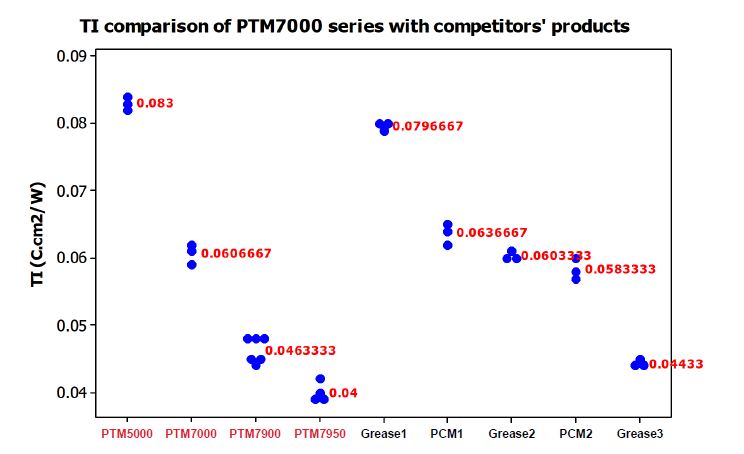
Honeywell PTM7950 is one of the most successful TIM products used in high power inverters and high performance computing devices. Ultra-low thermal impedance with minimum achievable BLT and superior long-term reliability make PTM7950 stand out from the competitors. PTM7XXX series also presents stability among vertical applications and pass automotive standard vibration test (Check the Vibration & Shock Test Report), thus PTM7XXX is currently widely used in automotive applications such as power inverters.

What is the difference between PTM7950 and PTM7950SP, PTM7950SPS?
PTM7950SP is the paste version of PTM7950 pad, they share exact the same properties. PTM7950SP has been added solvent to make it printable, thus needs extra drying step before assembly. Solvents can be adjusted so that the drying process is faster or slower. PTM7950SPS is slow drying version of PTM7950SP, it is designed for those who would like to have longer working windows.
How to achieve the minimum thermal resistance of PTM7950?
To achieve as low thermal resistance as possible for your device, you choose the material with high thermal conductivity, minimize the bondline thickness, and also improve the surface wettability. PTM7950 excels at the thermal performance since it could achieve minimum bondline as 17um and high TC as 8.5 W/m.K. Clamping pressure (30~40 psi) and temperature (at least 30mins@60°C) are suggested to achieve a minimum bond line thickness of the phase change material, typically less than 1.5 mil (0.038mm) for best performance. The material must go through the phase change temperature to exhibit entitlement performance. (Check PCM Application Note) .
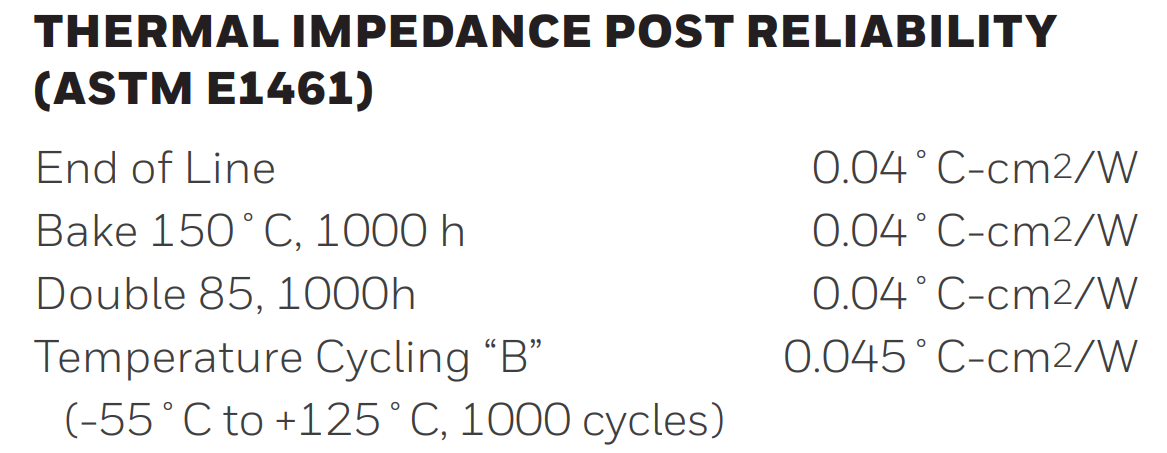
The figures below shows the TI achieved using PTM7950.
What are the reliability expectations of the PTM7950?
All the 7XXXseries (PTM7000, PTM7900 & PTM7950) pass the three major reliability tests with flying colours. Honeywell does not test beyond 1000 cycles, 92 hrs HAST and 1000 hrs HTS. However, anecdotally, some automotive customers have taken 7900 to beyond Honeywell’s limits and have found it to pass shock and vibration, longer temperature cycling and longer temperature and humidity soak. (Check Reliability Report PTM7950)
If your lifetime performance is defined mainly by power cycling, then you also check the PTM6000 series which will have the longest life. The main difference between the 7XXX products is the filler content which makes PTM7950 the most conductive.
Recently viewed products
LINQALLOY SP-SAC307 | Solder paste
- Sn99Ag0.3Cu0.7 Alloy
- 217 - 228°C
- Powder size: T3, T4 and T5
MCL-T27 | Melamine Transfer Cleaning Pellets
- Enhanced workability
- Surface restoration
- Operational efficiency

Hysol KL1000-3A | Black Epoxy Mold Compound
- Lowest Cost of Ownership
- Excellent Moldability
- Designed for ZIP, SIL, DIP packages

ABchimie R12230 Optically Clear Encapsulation Gel
- Optically clear
- Quick setting
- Good heat stability


