
OLS-1211 | Liquid Encapsulant - Two part Epoxy
Harmonization Code : 3907.30.00.85 | Polyacetals, other polyethers and epoxide resins, in primary forms; polycarbonates, alkyd resins, polyallyl esters and other polyesters, in primary forms : Epoxide resins : Other

Main features
- Epoxy potting compound
- Better anti blue and UV resistance
- Encapsulation of LED lamps and displays
Product Description
OPTOLINQ OLS-1211 is a two-component (Part A & Part B), low halogen, optically clear epoxy casting compound designed for the encapsulation of LED lamps and displays. Part A is an epoxy resin while part B is primarily a modified curing agent.
OPTOLINQ OLS-1211 offers excellent bonding properties to a wide range of substrates and good resistance against heat aging, cold and thermal shock. Additionally, this epoxy encapsulant features over then 99% visible light transmittance and low light decay. It has much better UV resistance and antiblue properties than OLS1000.
OPTOLINQ OLS-1211 has been developed for applications that will not be exposed to temperatures above 125°C but it can pass the SMD reflow process at 260 °C. It has been used extensively for low-power LED encapsulation, automatic LED casting, and potting of large optoelectronic modules. It can be colored and diffused by the addition of specific dye and diffusing concentrates.
OLS-1211
Unlike other products we offer, the products listed on this page cannot currently be ordered directly from the website.
 Shipping in 6 weeks
 Shipping in 6 weeks
 Shipping in 6 weeks
Packaging
TDS, SDS & Technical Documents
- Optolinq - OLS1211
- SDS_Optolinq_OLS-1211,_Part_A_(DE)_v1_00
- SDS_Optolinq_OLS-1211,_Part_B_(DE)_v1_00
- SDS_Optolinq_OLS-1211,_Part_A_(IE)_v1_00
- SDS_Optolinq_OLS-1211,_Part_B_(IE)_v1_00
Technical Specifications
General Properties
Thermal Properties
Chemical Properties
Physical Properties
Additional Information
Operating instructions
We recommend to process the product in a clean room at room temperature with a relative humidity lower than 35%.
- Preheat Part A to 50-55°C for 2 hours, making sure that you adjust this to the external temperature. Do not preheat for more that 24 hours.
- Mix part A with the diffusion agent and the pigment and stir well. Afterwards add Part B in a 100:100 ratio.
- To ensure that all the entrapped air bubbles are removed after mixing, the mixture of Part A and B should be done in a vacuum and degassed at 0.1MPa for 10-15 minutes.
- Clean and dry the glue injection tool. Use it within 90minutes in room temperature and under tightly sealed conditions, ideally in a vacuum.
Curing
It is advised to cure in two stages to reduce thermal stress.
- The mixture should be cured in the oven within 30 minutes after dispensing.
- The oven should be already preheated to the curing temperature.
- After the initial cure is finished the post curing should be carried out within 2 hours, ideally in the same oven.
Cure Schedule
- 1hour @ 130-135°C + 6-8hours @ 130-135°C
- 1hour @ 125-130°C + 6-8hours @ 130-135°C
- 1hour @ 105-120°C + 6-8hours @ 130-135°C
This schedule is a general recommended guideline for DIP LED that has to be adjusted based on your package type and package size. Smaller packages might benefit from a shorter Post cure schedule (ie 125°C for 4 hours) to avoid stress build up. If you have doubts whether the product has fully cured, you can run a DSC analysis on the cured sample and observe the exothermic heat flow. If there's none, it would signify that the epoxy is fully crosslinked or cured.
Post Curing is not advised to skip. The post-curing step is where the full potential of the encapsulant is achieved such as strength, hardness, thermal stability, and reliability to name a few. Skipping cure, on the other hand, means incomplete epoxy cure which will increase the risk of delamination, and package crack. If epoxy is fully cured, there will be no residual unreacted material.
Using Additives
Optolinq OLS-1211 can be mixed with diffusing agents or color pastes to achieve customer-specific purposes.
Recommended quantity of various diffusing agents and color pastes:
- OPC-R Red Color Paste: 0.1-0.5% by epoxy weight
- OPC-B Blue Color Paste: 0.1-0.5% by epoxy weight
- OPC-G Green Color Paste: 0.1-0.5% by epoxy weight
- ODF-090 Diffusing Agent: 3-5% by weight (LED lamps), 4-8% (LED displays)
For example, ODF would be 100 : 100 : 3~5 for LED lamps
Storage and Handling
OPTOLINQ OLS-1211 is supplied in 5Kg cans and should be kept in a cool and dry place (40% – 75% humidity) away from direct sunlight or temperature extremes. It should not contact any acid and alkali substances. Consult the Safety data sheet for the handling of this product
The product comes in fluorinated drums. Please keep it at 0-30° and use it within the shelf life .After the Can is opened, the unused product should avoid prolonged contact with air. Try to tightly seal the package to ensure its stable performance.
Shelf life at 0-30°C:
Part A: 6 months
Part B: 3 months
Data Ranges
The data contained herein are reported as typical values and/or range values based on actual test data and are verified on a periodic basis. They are reference values and not guaranteed specifications.
Recently viewed products
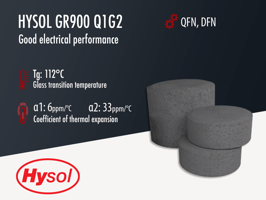
Hysol GR900 Q1G2 | Black Epoxy Mold Compound
- Designed for DFN and small QFN packages
- Excellent electrical capabilities
- Compatible with Copper Wire
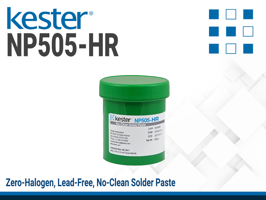
KESTER NP505-HR Solder Paste
- High reliability
- Exceptional print performance
- Zero-halogen formula

Hysol MG33F-0520 | Gold Epoxy Mold Compound
- Lasemark capability
- Low moisture absorption
- Solvent resistant

3M™ Scotch-Weld™ DP6310NS
- 1:1 mix ratio by volume
- Non-sag rheology
- 9-minute work life
LOCTITE ECCOBOND 50300-1
- One component
- Low CTE
- Low viscosity
LINQBOND PM-4911HV | Two part silicone potting material
- Low stress silicone potting gel
- Low viscosity, good leveling, and bubble-free curing
- Excellent long term temperature resistance
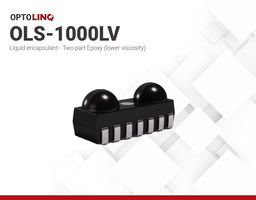
OLS-1000LV | Liquid encapsulant - Two part Epoxy
- Extremely Low viscosity
- Rapid Cure
- Visible Light Blocking
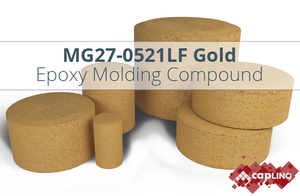
Hysol MG27F-0521LF | Gold Epoxy Mold Compound
- UL listed file number E255557
- Long Flow version of MG27F-0521
- Used for ceramic capacitors


